I caught the photography bug a couple of decades ago. It’s been an integral part of my life and relaying my adventures here on the blog. I share my journey, thoughts, stories, struggles, and triumphs here.
If a picture is worth a thousand words, it’s also worth an immeasurable richness of sensory memory.
The power of images to take you back to a place you’ve been is a testament to the combined power of photography and experience. The sights, sounds, and smells envelope you. The tactile sensations come to life again.
This scene is from 2013 during a time in my life when I frequented Great Smoky Mountains National Park. Even over ten years later, the feeling of peace and relaxation I had sitting on the moss-covered rocks and absorbing the sensual delight of this haven still washes over me.
At a time in my life when I’m working harder than ever, taking a moment to re-experience this place helps me relax, reset, and keep moving forward.
Bluesky Art Show
This post is inspired by the Bluesky Art Show, a challenge to share artwork surrounding a weekly themeeach Saturday.
I didn’t expect to be so moved. It was a simple portrait exhibit in a hallway but it caught me off guard. What I initially chocked up to simply a groovy, fun project stirred much deeper emotions.
And that was before I saw my friends’ faces in it. Then my dear man’s. Then my own.
The story of E Pluribus Unum.
Axle Contemporary
The exhibit was at The University Museum at New Mexico State University in Las Cruces but it was forged in the towns of south-central and southwest New Mexico.
The E Pluribus Unum: Mogollon exhibit was the final stage of a larger project that is the brainchild of Matthew Chase-Daniel and Jerry Wellman of Axle Contemporary. They collected thousands of portraits of New Mexicans throughout the state over the last 14 years. And they did it all in a mobile art space and solar-powered photo studio retrofitted from an aluminum bread truck.
The idea was for people to bring an object of special significance with them to the photo booth for their portrait. The goal? To create a portrait of the region of this moment in time and highlight that we are all unique individuals but also part of a larger whole.
A life-sized reproduction of the mobile photo studio.
Our turn
The final destination for the project was Silver City—our home base. They were set up with the mobile booth during our fantastic Southwest Print Fiesta. The day we visited the mobile photo studio during the Fiesta market, we hadn’t planned to participate. (I’d much rather be behind the lens than in front of it.)
Ever in “work mode,” we’d simply gone to meet the men behind this intriguing project on behalf of our budding Southwest Art Towns project. But of course they convinced us to step into the photo booth. I hadn’t given thought to bringing a special item with me.
I dug through my bag, scrambling to find something. The only item I had on me to represent something important in my life was a business card.
I don’t know what I would have brought instead if I’d given it thought. My motorcycle helmet maybe. In the end, the business card was probably the best thing I could have used.
Having to suddenly pull out a business card as a symbol of my life made me pause and take stock of how important “Val in Real Life LLC” is to me. I’ve been plucking away at this business for over 15 years through the ups and downs, pivots, surprises, and everything else. It stopped me in my tracks for a moment but I couldn’t linger. It was time to have my portrait taken.
Jerry Wellman of Axle ContemporaryMatthew Chase-Daniel of Axle ContemporaryAxle Contemporary’s dynamic duoThe Axle Contemporary truck at Silver City’s Southwest Print Fiesta in 2024.
Impact
That was in fall of 2024. In 2025, standing amongst the 800-plus portraits in the Mullennix Bridge Gallery the next summer, the goal of the project finally hit home for me.
I slowly walked down the first side of the hall and took in the many rows and columns of smiling faces of people I don’t know. The commonality I have with all of these people as a fellow New Mexican sank in.
A sense of New Mexican pride wrapped in curiosity about these people washed over me. I finished considering that side of the hall and turned to the other. My heart swelled to see my friends’ and colleagues’ faces begin to appear in the massive collage of portraits. Seeing what they were holding and—unlike the other portraits—having the personal insight of knowing why they chose that object, was powerful.
Eventually I came upon my dear man’s portrait. It was strange and beautiful to see that face—the one I love so dearly–in this sea of faces. And then there was my own right underneath it.
My dear man and his portrait.My dear man and me—two of many.
In one particular scene, a character recollects seeing the faces of all of the people she loves as if they were on a merry-go-round. Standing in that hallway surrounded by hundreds of portraits, it felt somewhat like that. Except I only know a small portion of the people. The rest are strangers to me.
That’s when this project really hit home. External narratives and distractions were largely stripped away with the exception of clothing and a special item. It was simply portraits of 800-plus New Mexicans of all ages, races, professions, and histories brought together in one story. It is a stark reminder that in spite of our differences, the big picture is that we’re all in this together.
From many, one
And that’s the point. This exhibit forces the viewer to ask themselves a lot of questions about assumptions we make, biases we hold, and how we choose to divide ourselves.
Foremost for me though was, what is my piece of this humanity puzzle? What is it I add to the story? And is it making our community a better place?
I don’t have all the answers but there is one thing I do know. We are New Mexico.
E Pluribus Unum.
The faces of my community in Silver City.
We’re all in this together.
Welcome to the softer side of Val. I promise I’ll get back to my normal, cussy self next time. Until then, I hope you’ll take a beat to find a connection with the people you encounter as you’re going about your day. We have a lot more in common than we usually take time to find.
Cheers, friends!
The cover of the book produced of the portraits.My portrait in the E Pluribus Unum: Mogollon book.My dear man was given a full page in the book. I get to call him my centerfold now.Video of walking through the exhibit.
*By clicking on an affiliate link, I may earn a small commission at no extra cost to you. Thank you for supporting this site!
Leave it to my Tremont photography family to provide the photographic inspiration kindling I so desperately needed. They often issue challenges that give me a much-needed kick in the ass to rediscover my photographic groove.
The challenge issued this time is born out of the Covid-19 crisis. Way back in the shutdown era, my pal Tom asked us to dig back into our archives. His directive was to find pre-2019 images that we had not yet bothered to process. Since we were all hobbled in the ability to get out and shoot, why not dig back into the depths of our hard drives and rediscover some hidden beauty?
Inspiration from within
I’ve had moments of wanting to pick up the camera and just shoot over the last 11 months since becoming a fulltime nomad. But the hamster wheel would always win. The urgency of managing our tenuous full-time-RVing-during-a-pandemic situation on a daily basis would crush any notion of creativity.
Here-and-there, I’ve been seeking inspiration in other people’s work that I admire. But the muse has only been coming in fits and starts with that tactic, and would always fizzle.
I’m realizing there’s a big gap between seeing the beautiful images others have created and using that as inspiration to create your own unique work. It can plant the seed. But when you’re having an epic grudge match with creativity, that seed is almost impossible to nurture because it’s out of reach. It’s a bit too theoretical. When you’re stuck, it’s difficult to internalize their work in the context of your personal vision, then mold it to your own needs and style.
Turns out what I actually needed was to look back at my own work. This latest challenge from my photog pals helped me remember that I’ve got a decent body of work in my own right. And the images are very Val and thus, more accessible as inspiration. I got a jolt as the muscle memory kicked in. Reviewing my own images reminded me of how much fun I had making them and how good it felt to see something and capture it. And it reminded me that I’m capable of creating compelling images.
I got fired up about playing with the post-processing more than I normally do in these challenges. That’s the icing on the inspiration cake. I experimented with a lot more abstract interpretations and masking to highlight elements and accentuate the story. I’m not certain how I’ll feel about those treatments long-term. I am glad I stepped out of my normal process to see what else is possible, though.
The Covid-5 Monochrome
So with that preface, here are the previously unloved images my photography pals inspired me to unearth from the bowels of my catalog. (Also, I cheated! It was supposed to be the “Covid-5” as Tom named our challenge but I took the liberty of choosing five each of monochrome and color/hybrid.)
The Covid-5 Color/Hybrid
Cheers, friends! Keep moving forward, even if you have to rethink what that means in challenging times. This exercise hasn’t been the antidote to an astoundingly bad year but it has helped.
Or perhaps it’s more important to look back when you’re not where you want to be. To remember where you were in your creative pursuit and what you’re capable of. And to celebrate some successes under the circumstances.
Unfortunately, other pursuits commandeered most of my attention in 2019. Between the effort to launch Sierra Mountain Passes and deciding to blow up my life by becoming a full-time RV-er, there really wasn’t a lot of room for anything else.
The flip side of not making photography a top priority is that I was at least deliberate about it. The decision (or acceptance) that photography simply had to be largely back-burnered was a thoughtful one. In doing that, I gained some space to not beat myself up about it.
Having that mental space was a sort of freedom that resulted in some unexpected successes, though. Because when I did have the camera in my hand I branched out more in exploring different styles. More studio still life, action shots (ok, mainly motorcycles), abstracts, and more people. I’d taken the pressure off of myself and was able to take advantage of the opportunities without forcing the issue.
In the end, I grew my photography mojo in 2019 as I expanded my skills to different subjects. I still have a lot to refine, of course, but I enjoyed the process of becoming more than a nature photographer. So with that context, here are my favorites from last year.
Top five
From Cuba to Nevada—food, people, and nature. These are the images I keep coming back to in reviewing my work from last year.
Runners up
Indulging in more review, I gave myself some runners up to fill out the field of 19 images from 2019.
Subjectivity
Creativity is subjective, as we all know. Even my personal choices shifted through the review process. And you will see them differently from me. My experience is intimately connected to the memories of making them. There’s no way for me to separate that. So without me revealing why I chose these particular images, give me your thoughts as impartial observers!
And if you like any of these shots, they are available in a variety of prints and products in my stores at RedBubble and Society6.
Travel is often about contrasts. We take notice of details when we step out of our too-familiar everyday scenery. They flood our senses as we absorb the sights, smells, and sounds of our destinations. The excitement of life and discovery light up our brains.
The contrasts of Cuba were gloriously stark. Not only to the place I call home but within itself. It felt impossible to absorb. And yet it all fits together seamlessly—the old and new, countryside and city, tourists and locals. It’s an extraordinary place, steeped in history.
Capturing Cuba
The urban architecture in Cuba is often detailed and intricate. It’s also known for its colorful facades that beg you to drink in the bright hues and vibrance. And the tropical forests embrace you in the deep, lush colors of nature—almost impossibly rich and surreal.
So in spite of intending to be off-duty for my recent visit to the island, I still felt compelled to take pictures. The colors can saturate you, though. So I embraced my infrared camera to dive into the details, textures, and contrasts that were sometimes lost in the vibrance. Shooting in black and white reveals structure and removes flamboyant distractions.
Havana
Havana is a bustling city, of course. But the energy is different from the urban environments I’m accustomed to in the U.S. There’s an underlying flow and rhythm to the constant movement.
Our second-floor apartment overlooked El Capitolo. From our balcony perch, we watched Cubans go about their everyday lives. Within the purposeful comings and goings, there was never too much of a rush for hugs and warm greetings amongst friends and families. Everyone seemed to know each other. It was delightful to witness.
Viñales
Tobacco country feels like another world from Havana, yet in reality less than 200 km from the big city on the small island nation. Viñales is a quiet haven, but still crawling with tourists. Once you step away from the main streets lined with tourist restaurants and busses, it’s easy to find the easier pace of the locals.
It seems almost every home in Viñales is also a casa particular. Ours was on the outskirts. And there we were treated to being a part of the daily life of Cubans. One that consists of work, school, and home while folding visitors into the mix with love and generosity.
Best of both worlds
Although these two cities are starkly different in the physical sense, there’s no difference in how the Cuban people treat each other. Hugs, robust handshakes, and genuine enthusiasm are the norm. Even as a visitor, that love is evident.
How does a travel blogger take a vacation? Apparently we don’t!
Earlier this month I took a weeklong trip to Cuba for the first time. I went into that adventure looking to be largely off-duty. I wanted to celebrate my dear man’s birthday and his long-desired wish to visit Cuba without the pressure of needing to produce content. But as you can imagine, the concept of relaxing and taking a true vacation with family and friends is a tall order for a travel blogger.
So I deliberately went to Cuba with no agenda of coming back with tons of images, thoughts, and stories. My goal was to take shots when it felt right yet have enough images to enjoy looking back down the road. As a result, I took pictures here and there but I wasn’t behind the lens the entire time. I took a step back to absorb the details of everything around me. It was really quite lovely.
The quintessential Havana scene
Regrets?
With that approach though, I certainly missed a lot of things I wish I had shots of. But the hard truth is that I always feel that way, even when I work hard at trying to capture the images that fill out the story. So really I’m not any more disappointed in my collection of images than usual!
The glaring exception being that I wish I had more people shots. Again, that’s not a new struggle for me but given the great people I was traveling with and those I met along the way, it stings a little more than normal. Because so much of what is amazing about Cuba is the people.
So stay tuned for a handful of vignettes about Cuba. In the meantime, here are links to the images on my Facebook page and my Cuba travel collections in my online stores at Zenfolio and Society6.
I’m late, as usual. My Tremont photography buddies picked their five best photos of 2018 ages ago and I’m just now getting to it. I marveled at their creations in awe before I selected mine. That was a mistake. It’s hard not to feel intimidated by their talent and expertise. I found myself saying “Wow!” at nearly every click through the gallery.
Even so, I’m a good bit happier with my overall body of work in 2018 than 2017. I still don’t feel like my work measures up to their standards but I did better. I simply have to use their inspiration to help push myself to grow further in 2019.
Before we get to the big reveal, though, remember your favorite independent motorcycling artist has two places you can support her.
I made some solid progress in regaining my mojo in 2018.
I carried my camera with me more often. No agenda other than being ready for unexpected opportunities. There were still times I was caught without it and cursed myself for the oversight but I definitely improved on that front.
I pushed myself to get out there when conditions were challenging. Even early on my birthday morning when fresh, fluffy snow blanketed the landscape serenely. All I wanted to do was be a lazy photographer lounging in bed with my coffee.
I worked more diligently at home. I took more time with my food photography and it has paid off in some decent stock photo sales. It also had the more nebulous effect of helping me stay in tune with my equipment so I can work more quickly when I need to shoot fast and furious on the fly.
I spent time trying photography that was out of my comfort zone and well-worn tried-and-true style. Let’s file it under expanding my photographic horizons to include action (ok, motorycycling), abstract, and food still lifes.
Anticipating more progess
Looking into 2019, I have some exciting opportunities that I damn well need to capitalize on.
I have a new Panasonic Lumix G9 camera to work with. Yeehaw!
I’m in the process of setting up a permanent home studio instead of flailing about as inspiration strikes, only to become frustrated and deflated as I struggle to set up my shots.
I’m going to Cuba in a couple of weeks. Talk about a photogenic location! If I can’t produce some unique and compelling images there, it’s time to hang it up, right?
Here are my five best photos of 2018
With that preface, here are my five favorite images of the year.
Light through a cabin window
Trio of bluets
Portrait of redtail hawk
Two lights in a dark pub
Old car and cabins at Bodie.
And my runners up.
Here are the shots that get an honorable mention.
Ships under the Golden Gate Bridge in fog
Harvesting a Christmas tree in Nevada.
The adventure dog playing in the snow.
Leaf art in the Smokies
Historic cabin at Bodie
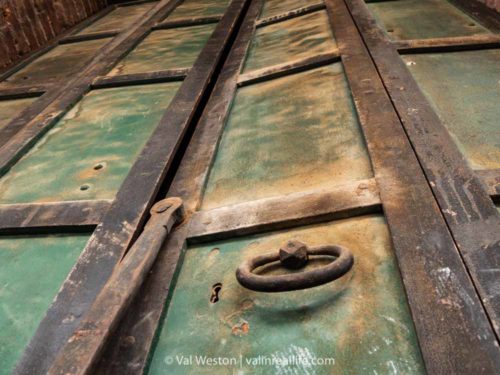
Historic steel door in Virginia City
Old boardwalk screws
Single cherry in sguar
Cottonwood glowing in afternoon light.
Foothills Parkway sunrise in infrared.
Tell me what you think
I’m supremely curious what y’all think. My own assessment of “best” and “favorite” will never be what others think. I’m too close to the images. They are steeped in the experience and emotion of creating them. So tell me what you think.
Head over to my Facebook page and vote for your favorite. No fair voting for more than one. 😉
Get yours!
As always, prints and products of these are available in my storefronts on Zenfolio and Society6. I’ve set up special Best of 2018 collections for you. Happy shopping!
Four months without a rain drop. Now a storm was finally coming in. A big one. Soft, diffuse light begged to be honored, courtesy of the now-unfamiliar cloud cover I hadn’t seen in months.
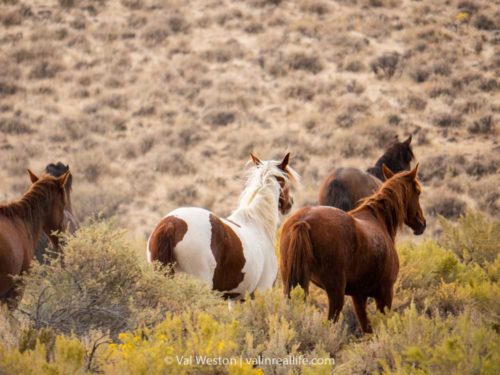
I hastily packed up my photography gear and told myself I needed to get in a few hours of shooting. The textures of historic Virginia City and wild horses in the sagebrush were in my sights. Yet my to-do list was screaming at me and my head had already scheduled every minute of my day to address its tasks.
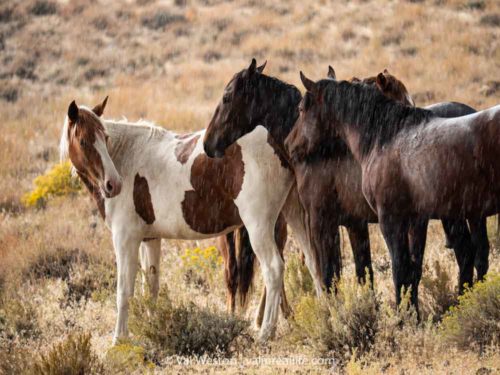
The chance to photograph horses in the rain is rare, though, especially so close to home. I would regret letting it pass by, not only for the unique weather, but more so for not living my values and not reclaiming the things I have let slip lately.
I could spend days shooting the colors, textures, and angles of Virginia City.
Into the storm
So I set out, camera pack nestled in the passenger seat as I quickly slalomed the curves of Six Mile Canyon up to Virginia City. After a couple of hours stomping around soaking up the textures and colors of C Street’s gritty historic boardwalks, I descended from the hills to find the horses in the valley below.
The storm was approaching slowly. It was menacing and powerful, almost taunting, as it crawled towards me. Yet cloud-dappled sunlight bathed the edge of the hills. Sure enough, the horses were easy to find. A large herd grazed cautiously in the sagebrush, carefully eyeing the approaching tempest.
Even with 600 mm of focal length to work with I couldn’t get close enough from the car to truly capture their spirit. I would have to set out on foot. I approached slowly, of course, and not too close. They are wild animals, after all, and respecting their space is crucial.
They grazed, faces buried in the brush so that I couldn’t get a decent shot. The air was utterly still—the calm before the storm. I began to think my excursion was worthless. Then the wind arrived in a sudden gust. The horses all turned their backs to it. It was no surprise but now all could I see was horse asses. Feeling frustrated and deflated as heavy raindrops pattered the thirsty soil, I lingered a little longer to simply admire them before walking slowly back toward the car for shelter.
With my foot an inch from the accelerator I gave them one last forlorn glance; a moment of grief for an unrealized desire. Suddenly they ran, hooves thundering into the hills. That meant a renewed opportunity for me. I followed slowly, tempering my excitement as I navigated the nonsensical web of dirt roads carved into the sagebrush. I caught up with them, securing the best position I could without disrupting them.
So there I stood in the driver seat of my trusty Subaru Forester, muddy boots on the upholstery and my torso sticking out of the sunroof—watching, shooting, understanding. We all considered each other in this surreal place on the edge of the storm. Heavy rain drops pelted us as the sun shone just a few hundred yards to the north and a thunderous downpour obliterated the view of Highway 50, a few hundred yards to the south.
I kept waiting for the torrent to overtake us and end my time with the horses. Hunger and fatigue were becoming hard to ignore but I didn’t want to squander my limited opportunity. I thought of my mentor, Bill Lea, and the time he’s invested in getting to know the habits and behaviors of bears. Countless hours in the field have led him to become an authority on them and helped him create stunning images. If he’s taught me one thing, it’s that this effort requires investment. So I stayed on, cold and wet, to learn about and admire these wild horses.
Not quite the angle I was hoping for.
The fruits of the labor
Five hours after I made the impulsive decision to face the storm, I returned home, exhausted. My stamina is clearly not what it once was or what it needs to be for a day like that. I’m moderately pleased with the tangible results, the photographs. I’m more pleased with my huge leap in understanding the horses and their behavior.
My biggest victory, though, was getting out there and doing it. I stopped making excuses and exercised skills that have been atrophying at an alarming rate. It would have been easier and more comfortable to stay home. But having embraced the opportunity, I know now that it’s always better to stand in the rain with wild horses.
If you have the chance, always stand in the rain with wild horses.
I recently finished another soul-filling jaunt to the Great Smoky Mountains Institute at Tremont for the spring photography workshop. If you’ve followed the blog for any length of time, you’re familiar with my love of this place. Now that I live in Nevada, the commute is a bit more cumbersome, making my time in the Smokies more limited and all the more precious.
I love my new home state out west but the Great Smoky Mountains, Tremont, and this workshop in particular hold a special place in my life. It’s a retreat and a reunion. The workshop schedule leaves us all exhausted yet fulfilled for the effort, the richness of the Smokies, and time with friends.
Those of us who return again and again call ourselves the “repeat offenders.” We keep coming back because we know this experience is about more than honing our photography skills. This is family.
When is a photography workshop more than a workshop? When you come to Tremont and discover a new family.
The people
One of the joys of greeting first-time participants is that they have no idea what awaits them. Over the course of the long weekend, we “old-timers” get to watch their understanding build. By the end of the weekend, most will tell you it has been a life-changing experience.
This time I had a short chat with John DiDiego, Tremont’s Education Director, who I know from my days earning my Southern Appalachian Naturalist Certification. I was remarking on the fact that two-thirds of the participants are returnees and how the conversations always come back to connection and friendship. He gave me a knowing smile and said “It’s always about the people.” True enough.
Instructor Tom Vadnais in action.
The workshop
Vetting workshops like this is tough. We all have limited time and money to invest in these things. It’s a leap to take it on if you don’t have some confidence that it will suit you.
Obviously I’m sold on the Tremont workshop experience but it’s nice to hear why others have been bitten by the Tremont bug. What seems to speak to participants most is the depth of collaboration. This workshop isn’t a unilateral instructor-to-student scenario. Information and inspiration flow in all directions among instructors and peers. Knowledge and excitement permeate every aspect of the weekend.
During this particular workshop, we also had the opportunity to photograph the birds of the Smoky Mountain Raptor Center. This was a unique chance to improve our wildlife photography skills as well as support the work the center is doing to rehabilitate injured raptors. We got images we’d never get otherwise and they use our photos to gain awareness for their program.
A visit to the Smoky Mountain Raptor Center helped me work on my largely undeveloped wildlife photography as well as support the amazing work Natalie and her crew are doing.
The instructors
Without fail, by the end of the weekend we’re all waxing philosophical about our time at the workshop. One of my new-found Tremont family members commented on how approachable and humble the instructors are. To him, that was the key. In my mind, though, it takes a triad of humility, confidence, and knowledge to be an effective instructor. If any one of those is missing or off balance, it’s not going to be a great experience.
The spring workshop is headed by the fabulous Bill Lea.
On a personal level
I mentioned earlier this year that I’ve been struggling with photography. I’ve made some strides in improving some equipment issues as well as my motivation. But it’s been a battle.
Artistically, I’ve been in the doldrums. Leave it to the people and environment of Tremont to help me reset. I needed this boost to reclaim my art, push my boundaries, and fall in love with photography again. It also forced me to learn some of the newer features and technologies of my new-ish Panasonic Lumix GX-85 camera. Immersing yourself in a workshop does that for you. It allows you to concentrate and grow, outside of life’s distractions.
The opportunity to work with the birds of the Smoky Mountain Raptor Center helped me figure out some of the more advanced features of my Lumix GX-85.
Case in point?
A young first-time Tremonster who excels at portraiture asked me to be a model of sorts for a shot through a cabin window. While I was sitting on the floor, still and contemplative, I noticed the texture of the wood floor in a way I hadn’t before. Even though I’ve been to that spot dozens of times. I also noticed that the sunlight through the window would highlight some holes in the floor. If I was patient enough to wait for it. So I did. I worked that spot for quite some time and came away with one of the most dramatic images I’ve ever captured.
If not for the serendipity of a fellow Tremonster liking the contrast of my blonde hair and my black hat, I would have missed my opportunity to work this subject. I simply wouldn’t have spent the time there because I would have overlooked it. If nothing else comes from my time at this workshop, the reminder to put myself in an environment in which I can build off of others’ excitement and vision would be more than enough.
Stepping out of nature and photorealism to try new things.
Why be a repeat offender?
All of these experiences are why we keep coming back. Beyond seeing my adopted Tremont family and the joy of being in the Smokies, returning to the same place allows me to explore it more deeply. I get second chances at shots I’ve missed. Each time, pieces of information and expertise sink in a bit further. I get to see how the instructors’ and other participants’ work has grown and it inspires me.
And if not for Steve Zigler’s presentation, I would not have given that window shot the high-key black and white treatment that I chose. I’ve always been tied to photorealism. By surrounding myself with excellent photographers I opened up a new world of possibilities.
If you’re in need of retreat and inspiration join me at Tremont for the fall workshop! You’ll come away with a new family.
What? Me? A photography mentor? How is that possible? Surely I don’t know enough to teach a young person how to become a photographer.
Oh wait. I have attended gobs of workshops and seminars. I have spent countless hours behind the camera. I do read photography blogs and articles. In spite of, or maybe because of, ups-and-downs with photography and many mistakes along the way, I have accumulated a certain amount of expertise. But I’m not an expert.
I still think of myself as a novice photographer. In my circles, I’m largely surrounded by artists far more advanced and talented than me so it’s easy to recognize what I have yet to learn and achieve, leaving me feeling like a beginner.
The student
Maybe it’s time to shift that mindset a bit and call myself an intermediate photographer now as I try to share what I know with a scrappy and motivated beginner. Fred and George dabbled with photography over the years but never got the bug. Now the teenage daughter of one of my best friends has taken up the camera. And she’s got chops.
I see in her a photographic eye similar to mine, especially as I was getting started. With that natural eye, learning the technical aspects is just that—the learning curve. By sharing what I know, hopefully I can save her from some of the struggles I had learning all of the complicated details—composition, technique, equipment, post-processing, catalog management.
The teacher
It’s well known that teaching solidifies your knowledge. It’s a window into what you truly know and don’t know. It’s also well known that just because you know a lot about a subject, it doesn’t automatically mean you’ll be a good teacher.
So in all this my challenge is not as much about regurgitating information but understanding how to present it in a way that’s useful to her and fits her learning style. My initial attempts in Death Valley last week when she joined me were disjointed and sloppy. She is gracious though and worked with me as I refined that over the course of our trip.
I also know that, while I’m her easiest access to a photography mentor, she needs to connect with others who can help her as well. That may end up being my most valuable role in her photographic development, especially given the challenge of living on opposite sides of the country.
All said and done, I fully expect her to surpass me quickly. I’d love to see that! Even if at some point she moves on to another craft, she’ll have learned valuable skills. And I’ll have learned a lot in the process as well.
My favorites are motorcycling, travel, photography, hiking, and knitting. There are a handful of runners-up but those are my core five. I consider them life values. Looking back at 2017, I didn’t do nearly as much of those things as I wanted or intended. Compared to 2016, my motorcycling mileage was slightly down. My hiking mileage was abysmal. I only completed one knitting project. My travels were disjointed and exhausting, with fewer travel days on which I was truly exploring. My time spent behind the camera plummeted.
To look at my Instagram feed, you’d probably call bullshit on me. I’m looking at the trajectory from one year to the next, though. In my personal review of 2017, what I see is a frenetic year. One in which the energy put into the things I love most wasn’t as purposeful as I’d like. Of those five core values, the backslide that bothers me the most is photography.
Short, whirlwind adventures through places like Seattle, Dragon Con, Salt Lake City, and British Columbia, made 2017 feel like a yo-yo year of travel.
A Challenge
What brought on this existential crisis? The annual challenge from my Tremont photography family. Every year we share our top five photographs with each other. It’s a tremendous source of inspiration from people I admire.
In reviewing my images from 2017, I’m not satisfied. In fact, I’m kind of pissed off at myself. I have no notions of being a virtuoso photographer but I do believe in competing with yourself to achieve personal growth. I know I’m better that what I produced last year. Not that I don’t have images I’m happy with. I have some I really love. But in relation to everything I did in 2017, the photographic results don’t match up.
Obviously, I can’t go back and have a do-over of 2017. I can, however, look at why I struggled and fix the obstacles. I can make certain I don’t stay on a trajectory that isn’t working.
A friendly challenge from good friends has me fired up to get back on course.
What went wrong
Big picture: I got lazy. Unlike my riding, I didn’t train or practice much. On a daily basis, I was inconsistent at keeping my skills sharp. I only engaged in photography in fits and spurts. I used to carry a camera everywhere. Just in case. I learned long ago that there are opportunities to capture moments everywhere, whether traveling, near home, or even at home.
I didn’t honor that in 2017. I realized that failing towards the end of the year so I started carrying a camera more. But I found myself doing stupid things like forgetting to put in a battery or a memory card when going out for short jaunts without a full kit. At one point, I realized my sensor was so dirty on my main camera that there were close to two dozen spots on my images. And it still took me three months to get around to cleaning it. In the most egregious offense of inattention, I actually shot a bunch of images of Mount Rainier only to realize after the fact that I’d been shooting with a giant smudge of some unidentifiable substance on my lens. Seriously, a big lump of sticky goo across the entire lens!
It’s all silly, really. And simple enough to fix. Those missteps made me realize I simply need to get organized and set myself up for having my gear at the ready when I need it. I also need to pay more attention to the little details of maintenance so I’m not wasting my time when I do shoot.
Another aspect of the lazy was not taking the time to shoot. With an iPhone in hand or even when I had a “real” camera with me, I failed to take the time to grab compelling images. I made excuses about the shot not being worth stopping for or that I didn’t have time. Oftentimes when I did pull out the camera, I did it half-heartedly. Throw in struggles to manage photography from the bike in challenging conditions, and that makes for a downward spiral.
Tier Number Three of lazy photographer syndrome? Often when I did shoot, I whipped off a couple of shots without taking the care to review my camera settings and make certain I captured what I envisioned. So many images from this year fell into the “close but no cigar” category. They’re shots that had one (if not more) technical elements out of whack in an otherwise nicely composed image.
In the end, I didn’t make photography a priority. I didn’t take the time. The opportunities were there. And I blew it on most of them. It’s clear now that the photography foundation I used to be able to count on crumbled in 2017.
For a good part of the year, my photography kit looked like this. Hardly a platform for success.
What went right
The year wasn’t a complete bust, though. In the few surges when I did make photography a priority I came away with some nice images. And I did break into people photography, which is a huge leap for me. I’m getting past feeling intrusive. That’s really hard for me.
Another realization I made towards the end of the year was that I had a mental obstacle with the weight, bulk, and complexity of my photography gear, particularly when on the bike. So I made changes to streamline my kit to make it easier to manage while riding. I’m still getting that system dialed in but it’s more realistic for how I travel most often. I’m optimistic that a simpler system will make embracing photography more appealing, especially when I’m fatigued or battling challenging conditions.
No more monster-sized Canon 50D to serve as my infrared camera. I converted a Panasonic GX7 in order to downsize and simplify my kit.
Top five
So here are my top five favorite imagess from 2017 that I shared with my photog friends. Mind you, not necessarily the “best” but my favorites. (Click on images to find them on my Zenfolio site.)
Other favorites
Here are some of the other contenders for my 2017 favorites. There wasn’t much more to choose from, though. My goal is to turn that around in 2018. I hope next year’s challenge finds me agonizing about which are my top five because I’ve put my heart back into my photography. In other words, I need to photograph like I mean it. Thank you to my Tremont friends who have lit a fire under my photographic ass!
All of these are available on my Zenfolio site. Check them out!
One of the best groups we’ve had at the workshop to date! Fabulous folks who know how to go with the flow. (Photo courtesy of the supremely talented Steve Zigler.)
Challenges
Returning to Atlanta at the moment means dealing with the insanity that is I-85 being closed in the heart of the city. Along with other catastrophic transportation issues that seemed to have come in a relentless onslaught on the heels of that event, Atlanta is not a great place to be right now—if you actually want to get anywhere.
On top of that, my arrival at Tremont coincided with massive storms—one of the reasons I opted to drive instead of ride. While a nice soft rain makes for excellent photography, flooding and torrential downpours don’t exactly make for ideal shooting conditions.
My main goal heading to the workshop this time was to stretch my boundaries by bonding with my telephoto lens, a piece of equipment I’ve always struggled to use effectively. I made some attempts while I was there but the weather simply made it the wrong tool for the job. That’s a challenge that will have to wait for another time.
I’ve been to this workshop a dozen times and this session presented a unique and unprecedented challenge with the flooding rains. We managed one decent day of shooting but only after rearranging the entire workshop schedule to accommodate the incoming storms. To have a day that we didn’t go out to shoot at all is unheard of at this workshop but it happened this time. The storms meant no early morning trip to Cades Cove which is one of the major perks of this workshop. Our Foothills Parkway morning was completely socked in. And the uncertainty of the storms meant no trip to Elkmont as a group. I pulled off a quick time lapse from Foothills Parkway on the first morning of the workshop, though.
Rewards
In spite of this year’s challenges, I still call the workshop a resounding success. We immersed ourselves in shooting along Tremont Road and the Lynn Camp Prong. For me, the conditions meant embracing my wheelhouse—macro photography. That normally means a metric ton of flower shots but this time I made a little snail friend which is about as close as I get to wildlife photography. Even keeping up with Speed Racer as I affectionately call him (her?) was quite challenging.
And we were still able to shoot the birds of prey brought in by Smoky Mountain Raptor Center. They are extraordinary to work with and are doing excellent work with these birds.
In the end, the Tremont workshop is my reunion with my photog family. While that has historically been a small core group of instructors and repeat participants, the Tremont photography family is growing as participants connect and find peace here. Of the 36 participants this time, 21 were repeat attendees. It was such a comfort to see familiar faces and share our love of Tremont. More heartening still was seeing the newcomers embrace it and want to return as well, even with the challenges thrown at them for their first experience at the workshop.
It’s a testament to the workshop and its leaders that these challenges can be absorbed and still run a successful workshop. It’s also a testament to the caliber of the participants. Everyone rolled with it. They understood weather can’t be helped and appreciated the efforts of the instructors to still deliver a valuable experience.
“Speed Racer” refused to stay in the frame. Little trickster!
The big picture
Of course, there’s a lesson, or reminder if you will, in this experience. Flexibility! Remaining flexible in travel, and life in general, means you can adjust for the unexpected without angst. That ability to dance with the circumstances means you’re likely to have better experiences because you aren’t focused on what didn’t come to pass. It means you look at the changes as new or different opportunities, not losses to be lamented.
With that in mind, here are few shots I’m pleased with from a very soggy weekend.
Snails get a bad rap for being “slimy” but the super-chill elegance with which they move is worthy of appreciation.
The textures and lines on this little guy are entrancing.
So the funny thing about the snail is that I only discovered him when I almost stepped on him in my quest to shoot this Solomon’s Seal. It was a close call.
When in doubt, or when the weather is challenging, I dive back into my safe place… macro world!
This aster was way more ready for its closeup than Speed Racer was.
What is the value of a photograph? In the digital age, unauthorized use of an image doesn’t seem like a big deal. It’s just pixels, right?
No, it isn’t.
What gives an image value?
What did it cost me to make this image? A lot more than you likely imagine.
What would you pay for art to hang on your wall? An image that brings peace, inspiration, or beauty into your life? You wouldn’t walk into a store, pick up a print, then walk out without paying would you? Does a physical print have value simply because of its tangibility? Is the value only in the glass and frame?
I’ve had repeated conversations with non-photographers. Conversations trying to raise awareness of what it means to “steal” an image. And yes, downloading any image without permission, even for personal use, is theft.
To the user, it’s just a pretty picture for their wallpaper on their computer, at best. Or at worst, someone uses it for their own profit without giving the creator credit or a share of the revenue.
What are the factors that give that image value?
When you add in the costs of specialized equipment like infrared gear, expenses go up even further.
The investment in equipment is not insubstantial. The cameras, lenses, accessories, computers and software used to create the image are costly. In the thousands of dollars range even if you keep it simple.
Travel expenses to get to the place the image was created. Again, very likely thousands of dollars depending upon the trip.
What value do we put on training? The classes, seminars, and workshops we attend to hone our skills. The time, money, and energy invested in those? Again… thousands of dollars.
Now consider time? What’s your salary or hourly rate at your job? Add in the time a photographer spent to capture the image that took your breath away and the price tag goes up even more.
I think you see what I’m getting at. A “simple” image you see online is a labor of love for a photographer. One that, beyond the subjective of beauty, holds a very real objective expense for the person who captured the image. Even when we consider prorating those costs over all of the images we capture, the cost is substantial.
It isn’t just pixels.
What can you do?
The physical costs of my profession are sometimes high as well.
Do I mind if you want to download one of my photographs for your wallpaper on your computer. No, not really. I hope it inspires you. I’m glad it brings you joy. But in the digital age, artists need your help…
Share your love for our work with your friends! Share links to our websites, Facebook pages, and Instagram.It helps. It really does. This is our profession. Word of mouth, social proof, sharing… this is what our world is made of. People like me don’t get paid when we click the shutter after learning our craft, investing in equipment, researching locations, and taking our trip. We pay our bills when you buy our images and click on our ads and links.
If you see a person’s work being used by another site, let them know. It may be authorized, but often it’s not. The web is a vast hole no writer or photographer can police for copyright infringement alone. I know more than quite a few people who have found out about misuse from a follower recognizing their work and giving them a heads up. (Just consider Nomadic Matt’s latest tale to give you an idea.)
Buy prints, books, and other offeringsfrom us. Better yet, give them as gifts.
If you work for a company that uses imagery in your publications and online presence, make sure they are properly licensed through the artist or stock agency.
Love an image? Show the creator some love back. 🙂
Coming soon…
With all that in mind, I’m honored when someone falls in love with one of my creations. It means a lot to me. So coming soon, you’ll have the opportunity to have some of my images for your guilt-free personal use. Plus I’ll be sharing the stories behind them that I hope will further inspire you and give you a better sense of the effort it takes to capture these scenes.
My Tremont family: Sue, Steve, and Tom, my late macro lens, and maybe an extra-large beer for commiseration purposes.
At the Tremont workshops (both spring and autumn), I’m notorious for my love of macro work and penchant for wallowing in the dirt for shots of the micro-worlds of the Great Smoky Mountains. It’s my photographic wheelhouse, so-to-speak. To a fault.
So imagine my panic when I got into the field at this year’s workshop and I realized my macro lens wouldn’t focus! I was a figurative deer-in-the-headlights to say the least and there may have been some minor hyperventilating. As my initial bewilderment subsided, it dawned on me—I’d dropped it off my kitchen bar a few weeks earlier in a rush to get out the door to the airport. I hadn’t ended up needing the lens for my work in that time so I completely forgot the mishap.
Sitting behind my camera in a bed of moss, I finally mustered the gumption to hold the lens to my ear and gave it a little shake. There was a heart-sinking rattle. Lenses aren’t supposed to rattle. I got up and walked in a daze towards my buddies to tell them the news. They were quite sympathetic, of course. And understood the implications for me in particular.
That night, my friends Tom and Steve tried to find a way to get a new macro lens to me so I could have something for the workshop. I was drawn into the idea at first, partly because I couldn’t imagine life without my beloved macro lens.
After some processing time though, I opted to embrace the challenge to my photography rather than scramble for a new lens. It would force me to look at my workshop experience from a new perspective and expand how I see and shoot. I convinced myself to look at my lack of macro lens as a new opportunity rather than a missed one, even though I’ll admit it took some time to fully accept.
That’s not to say I didn’t manage to use my 14-140mm zoom lens in a macro capacity in some cases. But here’s what I came away with after deciding to accept my situation and not waste a bunch of time and energy fast-tracking a new macro lens.
Soft light as the sun rises over Foothills Parkway.At Elkmont, I’m even more inclined to go macro but I pushed myself to pull back to capture bigger details of the abandoned cabins.An iconic view of Lynn Camp Prong that includes the bridge. I’ve spent most of my time in the past trying to keep it out of the shot.A different style of macro than I would shoot with my “actual” macro lens. More of an intimate landscape macro. Bluets are an iconic flower of the Smokies and the slightly larger view than I would normally shoot gives perspective to their presence.My lack of macro lens forced me to recall the joy of shooting reflections. Capturing the lush intimacy of the Smokies was quite a joy. Rounded river rocks, moss, blue sky, tall trees…Working with reflections in the abandoned cabins at Elkmont.I can’t help but dive into the beautiful micro worlds… I love the detail.Ok, so I couldn’t resist this macro situation on a morning when the landscape vista was completely obscured by fog. Can you blame me? I did take some good- natured teasing for professing I wasn’t going to be shooting macro during the workshop but ended up on the ground wallowing in the dewy grass anyway…
I did manage to spend a good bit of time in my other guilty “wheelhouse” pleasure: infrared photography. Sometimes baby steps toward change are ok, right?
Foothills Parkway after sunriseAn intimate landscape of a small cascade on Sam’s Creek… to me, this is very “Smokies”The famous Cades Cove tree bathed in fog.Seeking a new perspective sent me down a path I’d never gone before even though I walked past it countless times.Giving Sam’s Creek the infrared treatmentCades Cove fence intimate landscapeInfrared portrait of the Cades Cove tree.
And now for your moment of green…
My new perspective inspired me to shoot a panorama, a rare technique for me. Here’s to stretching your horizons.
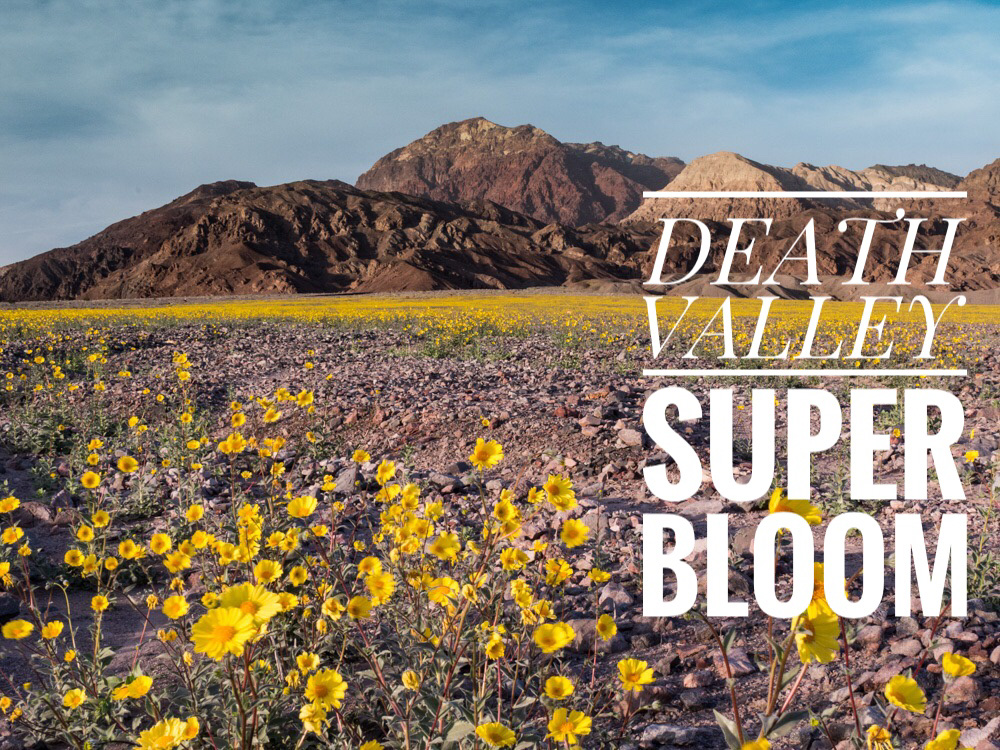
A few weeks ago, I got to shuttle myself out to Death Valley National Park for the Super Bloom. Unfortunately I had to be there President’s Day weekend. That’s simply how life works sometimes. I had to accept that it was going to be crowded and still just a bit before the peak of the wildflower season. Given the rarity of this event, I couldn’t afford to be picky so I took the opportunity as it presented itself.
So I bet you’re expecting to see lots of flower shots, huh?
The super bloom ended up being a footnote in terms of satisfying images. The crowds, wind, and haze made flower shots really difficult. But being there was astounding even if my resulting images don’t reflect the epic nature of this year’s wildflower display.
Instead of staying frustrated with my inability to capture the glory of the super bloom, I got into full-dork mode on infrared and historical photography in Rhyolite and Titus Canyon.
With that, here’s a little slideshow of my whirlwind trip to Death Valley for the Super Bloom. Enjoy!
Death Valley Super Bloom 2016
Find more of my work from Death Valley on Zenfolio and Society6!