Tag: car-camping

  • The Car-Camping Guide: Road Trip Tips and Tricks

    The Car-Camping Guide: Road Trip Tips and Tricks

    Before I left on The Pacific Northwest Tour, I shared my road trip essentials… the things I do to prepare from a safety standpoint.

    Now for a random selection of road trip tips and tricks I use on the road that help make the trips more manageable and fun.

    Urban stops…

    For myself, I could quite do with minimal hotel stops but since the minions are less inclined to camp non-stop, I have to strike a balance on longer trips. Even though I generally don’t enjoy hotels, I still try to use them to my advantage by placing those stops strategically. They come into play when we have a lot of ground to cover so we need to maximize driving time rather that taking hours to pitch and break camp. These stops often allow me to dry tents, do laundry, and catch up on work by making use of free wifi.

    drying tent
    Scoring a hotel room with a balcony? A total bonus when you’ve got soggy camping gear to dry.

    The quick bag…

    I haven’t detailed my packing strategy for you yet but one of my little tricks is having a duffle bag that I can throw in just what we need for a quick overnight at a hotel instead of having to bring in all of our bags. A change of clothes and our personal toiletries are really all we need to be dragging into the hotel aside from our valuables like computers and camera gear.

    This duffle also serves as our day bag when we’re camping. Since our main clothing duffles are in the tent once we set up camp, this bag then holds rain gear, a couple of towels, and a change of clothes should our explorations take a turn for the excessively dirty or wet.

    duffle bag
    My multi-purpose quick duffle bag.

    Laundry…

    The short version is leave your jeans at home. Heavier cotton clothes take longer to dry. Public laundry facilities are highly variable and dryers notoriously unreliable. And when you’ve been on the road all day and all you want to do is go to sleep, having to keep plugging quarters into the machine to get everything dry is a misery. So stick with lightweight cotton or synthetics that won’t leave you cursing the laundry gods.

    In between laundry stops, I use a mesh bag to contain dirty clothes. The air flow keeps the clothes from becoming rancid and it’s much better for them than being sealed in a plastic bag that many people seem to favor on road trips. I also carry small mesh zipper bags for washing delicates and small items so they don’t get lost or destroyed in public machines.

    mesh laundry bag
    Mesh laundry bags preserve clothes in the long stretches between laundry days.

    Quarters…

    Yep. I stock up on quarters. One of my pet peeves is scrambling for them to get laundry done so now I just bring them with me. For the seven-week Pacific Northwest Tour I took four rolls. In addition to laundry, they’re useful for parking meters and pay showers. Having them on-hand preserves my cash flow as well as removes the hassle-factor of having to break bills and what-not.

    quarters
    A stash of quarters reduces the laundry/pay shower/parking meter hassle on road trips.

    Backroads…

    I’ve mentioned my love of backroads before. Taking them adds a deeper element to our travels. Sometimes we do have to blast through some serious highway time but when at all possible we bring it down to the backroads. It keeps me alert, breaks up the monotony, we find amazing geocaches, and we get to see more interesting, unique places.

    Stay gassed…

    I have a policy of filling up at a quarter tank on road trips (and around town as well since January’s local “adventure”). Obviously it means I fill up more often but usually I need a stretch break anyway long before a tank of gas is run out.
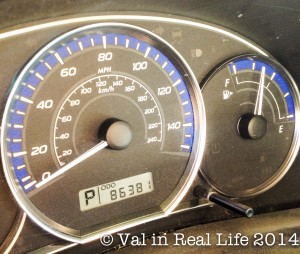
    subaru gauges
    Know your car and don’t push your luck. Fill ‘er up at a quarter tank.

    When you’re on the road, especially out west, you can get into some pretty serious no-mans-land situations where you can’t rely on a fuel station being where you need it. That quarter-tank buffer can be crucial. Even so, there are times when I’ve inadvertently pushed my luck but I’ve never been stranded for running out of fuel.

    Another key factor here is knowing your vehicle well. You need to know the size of your tank and the mileage it gets under various conditions so you can anticipate your fuel needs for your route. Because when you see a sign that says something like “No fuel for 100 miles” you better know whether or not you can make it or you’re setting yourself up for a very unhappy trip. Filling up more frequently to avoid that is well worth it.

    Packing a lunch…

    Aside from the obvious cost-saving benefit, keeping food on hand gives you options. That’s important when a trip starts to go sideways or when you’re pressed for time. You also aren’t relying on restaurant availability in far-flung and unknown locales.
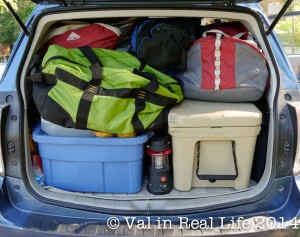
    packed subaru
    When the car is packed full there is an added hassle factor in stopping to make lunch so I do it before we leave camp.

    Beyond just keeping food supplies with me, I often pack a lunch before we leave camp. This removes the hassle of having to dig through a fully packed car to make it in an unknown and possibly less-than-ideal location. This also shortens the time needed for stops when you’re trying to cover a lot of ground. It really is that much easier to do before leaving camp than on the road.

    Having meals already prepared also means you are less likely to succumb to an expensive restaurant stop because you’re tired or stressed. It’s an entirely different story to deliberately stop for food somewhere that adds to your travel experience but it casts a pall over your trip to fork out for any old road food simply because you weren’t prepared.

    Keep cool…

    For shorter trips or starting out on longer trips, I freeze 1-gallon jugs of water, creating homemade block ice. Not only is it often difficult to find, but by doing this instead of buying block ice, I can still drink the water once the jug melts. This maximizes use of the very limited space in the adventure-mobile.

    National Parks Pass…

    One of my favorite tools is the National Parks America the Beautiful Pass. If you’ll be visiting even a couple of park units the next year, it pays for itself quickly. For $80 a year, you have access to National Parks as well as many other federal lands. I even use it at my local National Recreation Area that I visit several times a week.

    national parks pass
    My ticket to fabulous adventures across the country.

    And now for your moment of green…
    dinosaur national monument
    Getting out to explore the vast treasures of the U.S. is no problem if you think ahead just a bit.
  • The Car-Camping Guide: Road Trip Essentials

    The adventure-mobile takes a lot of abuse. With the help of my trusty mechanic, we keep her running smoothly.

    Part of that method is breaking the process down into manageable chunks. One of those chunks is a collection of basic pre-emptive measures that don’t take a lot of effort but can make a big difference in how a trip goes when the going gets tough.

    Much of this may seem like no-brainer material but when you’re in the chaos of packing, they’re easy to overlook or even dismiss as overkill. And while I actually keep some of these measures in place all of the time, I always do a double-check before a trip to make sure nothing has gone amiss.

    The adventure-mobile…

    • Pre-trip service: Routine maintenance for your adventure-mobile is crucial to maintaining performance and catching little things that can become big problems later. As much as a break-down near home is a headache, when you’re on a road trip, it can become a trip-killer and very expensive as you find yourself over a barrel, far from home, and stressed about getting back on the road.
    • Spare: Always check your spare and jack tools to make sure all pieces are there and that the spare hasn’t gone flat. Just as important is actually knowing how to change the tire. Having the means to change the tire is useless if you don’t know how.
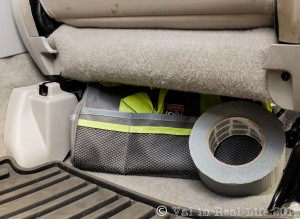
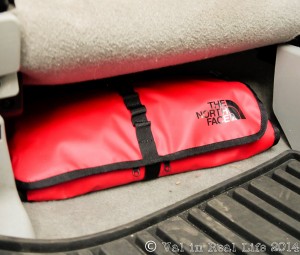
    Tools and duct tape stashed under the passenger seat for quick access. Normally the tape lives in the spare tire well which becomes hard to access when we're fully packed.
    Tools and duct tape stashed under the passenger seat for quick access. Normally the tape lives in the spare tire well which becomes hard to access when we’re fully packed.
  • Jumper cables: You’d be surprised how often I use these. Having them on hand has saved me countless hours of waiting for help as well as allowed me to get other folks back up and running quickly. Again… knowing how to use them is important.
  • Roadside Assistance: Having that monthly or annual fee for roadside assistance seems pointless and aggravating when you’re not using it but having that resource when you’re in trouble is priceless. When you factor in the cost of a single tow service against a minimal fee, it quickly becomes worth it. I travel with much greater peace of mind of knowing that safety net is in place and that with one phone call I can get the help I need.
  • Owner’s Manual: Make sure you’ve keep your manual on hand and you won’t be left guessing and scrambling for simple things. It’s the ultimate, easy reference on how to change a lightbulb or fuse or even do some quick trouble-shooting so you can assess the seriousness of an issue.
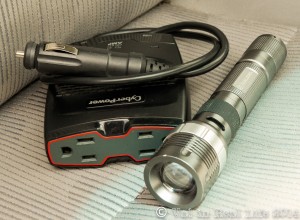
  • My Goal Zero flashlight lives in that car at all times and can be recharged via a USB cable I can plug into my power inverter... which also always stays in the car.
    My Goal Zero flashlight lives in that car at all times and can be recharged via a USB cable I can plug into my power inverter… which also always stays in the car.
    My large first aid kit gets stashed under the drivers seat when we're fully loaded so we have unimpeded access in case of emergency.
    My large first aid kit gets stashed under the drivers seat when we’re fully loaded so we have unimpeded access in case of emergency.

    Emergencies…

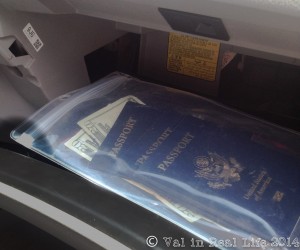
    Extra cash and passports are easy to throw into the glove box.
    Extra cash and passports are easy to throw into the glove box.
    • First aid: I keep an extensive first aid kit in the car at all times but I always give it a once-over before a big trip to replenish often-used supplies like adhesive bandages as well as check expiration dates. The biggest point I can make here is that having a first aid kit is useless, and possibly harmful, if you don’t how to properly use what’s in it. Build your kit based on your current knowledge and seek out more training to build your skills.
    • Glove box stash: I always keep an old wallet in the glove compartment that holds the extra stuff I don’t need to carry on a daily basis. It’s my of stash essential items like my auto registration, insurance card, and my roadside assistance info. I also carry an old driver’s license and spare credit cards. In the case of a lost wallet, having these on hand goes a long way. Without them you can find yourself quite stranded and helpless. In addition my extra little wallet, on long road trips I also carry our passports and some emergency cash in a heavy-duty waterproof pouch which stays locked in the glove compartment.
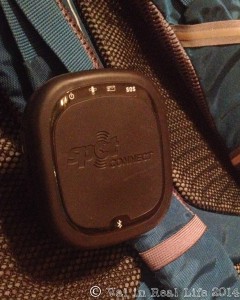
    My newest addition, the Spot Locator will give me emergency communication options, even without a cell phone signal.
    My newest addition, the Spot Locator will give me emergency communication options, even without a cell phone signal.
  • Flashlight:Having a flashlight in the car at all times is one of the most useful things I know. I’m partial to my Goal Zero since I can keep recharging via a USB cable and not have to worry about batteries.
  • Tools and tape: I keep a roll of duct tape in the spare tire well as a general practice. You just never know when you’ll need to MacGyver something, whether it’s outdoor gear, a broken window… you name it, duct tape can save the day. I also carry a small multi tool everywhere I go for the same reasons but for these longer trips I also add a small, basic tool bag to the mix.
  • Spot: My newest addition is a Spot Locator device. Going into areas where I can’t count on cell signal, it’s my emergency lifeline should I find myself in a difficult situation.
  • Big picture…

    Let’s face it, no matter how much planning you do, things go wrong. These measures are really painless to put in place but go a long way when you’re in a bind on the road.

    I’m sure I’ve missed some other great road trip essentials so tell me what I’ve missed. What are your go-to tactics for pre-emptive damage control?

    And now for your moment of green…
    Subaru Forester by open range sign in Nevada
    With my road trips essentials in place, I’m ready to go free-range in the adventure-mobile.
  • Car Camping 101

    Car Camping 101

    I’ve been car camping a long time. My setup and who I travel with has changed dramatically over the years but I’ve certainly earned my stripes in the camping-with-kids arena. Here is some fundamental advice I give to aspiring campers, especially those with kids.

    Like anything new, a little up-front education greatly improves your experience by simply avoiding some common mistakes or misconceptions about what to expect. This is just a starting point, of course. Use these tips as a primer and do some homework before setting out. There’s lots of great advice out there. Soak it all up and give yourself solid start before your first trip.

    Camp Life
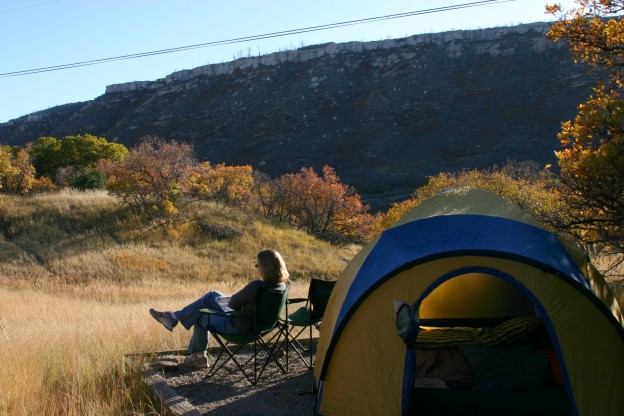
    Camp life at Mesa Verde National Park.

    8 Tips on getting started

    Rather than give you an exhaustive guide, I’ll just throw out some general pointers as you plan your first adventure. This is geared towards the aspiring car camping family (as opposed to RVs, teardrops, or backpacking) since that’s what I know best with kids in tow. Other camping styles are very different beasts in terms of getting started and require different advice. So for you car camping wannabes, here goes:

    Keep it simple!

    Don’t try to bring all the comforts of home, you’ll just be frustrated trying to deal with unnecessary fluff. The point is to get away from all those complications, isn’t it? So don’t overdo it by trying to create a home-away-from-home. Make the most of the change in scenery and let camping be different from your day-to-day life. Not to mention, anything you pack for the trip has to be unpacked when you return. Don’t make more work for yourself, it takes the fun out the whole process.

    Make a checklist

    You don’t want to forget something crucial. We’ve done it, it stinks. Until you’ve got your camping groove down-pat, your list is the ticket to a smooth journey.

    Camp Life - Grand Canyon
    Sometimes you get visitors. Always be aware of how to deal with wildlife in the area.

    Stay local

    For your first adventure, you’ll be doing enough just to get the whole family out of the house so keep the drive time short. Plan on rolling into your site with plenty of time to set up camp and get dinner completed before dark. Also, I highly recommend state and national parks over commercial campgrounds as a general rule here in the U.S.

    There are some very nice private campgrounds but by-and-large I find the state and national parks to be more peaceful, provide easy access to trails and educational programs, and to be less expensive.

    Quality gear is key

    Do not skimp. This is your home for the duration of your trip! If your gear sucks, so will your trip.

    For example, if your sleeping bag doesn’t keep you warm and you spend the night shivering and sleepless, you won’t have fun and you’ll probably never go camping again. But don’t blame a bad experience on the destination if your gear is what fails you.

    With that in mind, quality gear can be expensive. If you’re just starting out it makes a lot of sense to rent and borrow whatever you can, not only from an expense standpoint but also to get a feel for the ins-and-outs of different gear before you invest. It’s always better to rent or borrow quality gear than to own inferior products.

    Gimpy Camper
    Even gimpy moms can go camping and have a good time.

    Know your gear

    Always test your gear before you’re on your trip. You don’t need the surprises of missing or malfunctioning pieces when you’re miles from anywhere to fix the problem. That can ruin a trip. You also don’t want to be struggling with learning how to use equipment under the pressure of getting camp set up or dinner made.

    Don’t be afraid to get dirty

    But keep the dirt out of your tent. Getting dirty is one of the joys of camping, especially for the kids. But keep the dirt out of the tent if you want to sleep. Grit in your sleeping bag makes for a very uncomfortable night. Make sure everyone is brushed off or wiped down for a good night’s sleep.

    Bring something to use as a doormat as well as teach the kiddos the butt-in-feet-out trick. Just have them sit inside the door of the tent but leave their feet outside while they take off their boots and brush off excess dirt. (But don’t leave boots outside since creepy crawlies often decide to make it their home for the night. Designate a spot inside the tent near the door to stow them, as dusted off as possible.)

    Let them help
    Let them help. It’s all sorts of family bonding goodness.

    Get the kids involved

    In other words, put them to work. Even little campers can have jobs and they typically relish the chance to help. It fosters independence and problem solving. Plus they usually love to be involved. The excitement of camping seems to bring out the best in kids when the parents stay relaxed and flexible.

    Go with friends

    Not only is camping together a great friendship experience but buddying up on supplies can save space and sharing meal prep duties between families reduces work for everyone.

    The wisdom of experience

    I wish I could say we had all this figured out from the start but alas, it took us many years to find our camping groove. A lot of this seems like a no-brainer but you’d be surprised by the mistakes even experienced campers make.

    This isn’t an exhaustive everything-you-need-to-know list but keeping these things in mind can be the difference between a frustrating, miserable trip and igniting your family’s passion for the outdoors. It’s a short step outside of your comfort zone into a whole new world. Enjoy!

    When camping, be sure to know your green and stay away from trip-ruining nasties like poison ivy.