Tag: Guides

  • The Car-Camping Guide: Road Trip Tips and Tricks

    The Car-Camping Guide: Road Trip Tips and Tricks

    Before I left on The Pacific Northwest Tour, I shared my road trip essentials… the things I do to prepare from a safety standpoint.

    Now for a random selection of road trip tips and tricks I use on the road that help make the trips more manageable and fun.

    Urban stops…

    For myself, I could quite do with minimal hotel stops but since the minions are less inclined to camp non-stop, I have to strike a balance on longer trips. Even though I generally don’t enjoy hotels, I still try to use them to my advantage by placing those stops strategically. They come into play when we have a lot of ground to cover so we need to maximize driving time rather that taking hours to pitch and break camp. These stops often allow me to dry tents, do laundry, and catch up on work by making use of free wifi.

    drying tent
    Scoring a hotel room with a balcony? A total bonus when you’ve got soggy camping gear to dry.

    The quick bag…

    I haven’t detailed my packing strategy for you yet but one of my little tricks is having a duffle bag that I can throw in just what we need for a quick overnight at a hotel instead of having to bring in all of our bags. A change of clothes and our personal toiletries are really all we need to be dragging into the hotel aside from our valuables like computers and camera gear.

    This duffle also serves as our day bag when we’re camping. Since our main clothing duffles are in the tent once we set up camp, this bag then holds rain gear, a couple of towels, and a change of clothes should our explorations take a turn for the excessively dirty or wet.

    duffle bag
    My multi-purpose quick duffle bag.

    Laundry…

    The short version is leave your jeans at home. Heavier cotton clothes take longer to dry. Public laundry facilities are highly variable and dryers notoriously unreliable. And when you’ve been on the road all day and all you want to do is go to sleep, having to keep plugging quarters into the machine to get everything dry is a misery. So stick with lightweight cotton or synthetics that won’t leave you cursing the laundry gods.

    In between laundry stops, I use a mesh bag to contain dirty clothes. The air flow keeps the clothes from becoming rancid and it’s much better for them than being sealed in a plastic bag that many people seem to favor on road trips. I also carry small mesh zipper bags for washing delicates and small items so they don’t get lost or destroyed in public machines.

    mesh laundry bag
    Mesh laundry bags preserve clothes in the long stretches between laundry days.

    Quarters…

    Yep. I stock up on quarters. One of my pet peeves is scrambling for them to get laundry done so now I just bring them with me. For the seven-week Pacific Northwest Tour I took four rolls. In addition to laundry, they’re useful for parking meters and pay showers. Having them on-hand preserves my cash flow as well as removes the hassle-factor of having to break bills and what-not.

    quarters
    A stash of quarters reduces the laundry/pay shower/parking meter hassle on road trips.

    Backroads…

    I’ve mentioned my love of backroads before. Taking them adds a deeper element to our travels. Sometimes we do have to blast through some serious highway time but when at all possible we bring it down to the backroads. It keeps me alert, breaks up the monotony, we find amazing geocaches, and we get to see more interesting, unique places.

    Stay gassed…

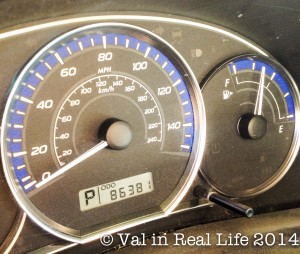
    I have a policy of filling up at a quarter tank on road trips (and around town as well since January’s local “adventure”). Obviously it means I fill up more often but usually I need a stretch break anyway long before a tank of gas is run out.
    subaru gauges
    Know your car and don’t push your luck. Fill ‘er up at a quarter tank.

    When you’re on the road, especially out west, you can get into some pretty serious no-mans-land situations where you can’t rely on a fuel station being where you need it. That quarter-tank buffer can be crucial. Even so, there are times when I’ve inadvertently pushed my luck but I’ve never been stranded for running out of fuel.

    Another key factor here is knowing your vehicle well. You need to know the size of your tank and the mileage it gets under various conditions so you can anticipate your fuel needs for your route. Because when you see a sign that says something like “No fuel for 100 miles” you better know whether or not you can make it or you’re setting yourself up for a very unhappy trip. Filling up more frequently to avoid that is well worth it.

    Packing a lunch…

    Aside from the obvious cost-saving benefit, keeping food on hand gives you options. That’s important when a trip starts to go sideways or when you’re pressed for time. You also aren’t relying on restaurant availability in far-flung and unknown locales.
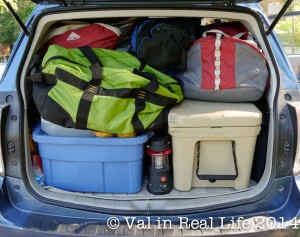
    packed subaru
    When the car is packed full there is an added hassle factor in stopping to make lunch so I do it before we leave camp.

    Beyond just keeping food supplies with me, I often pack a lunch before we leave camp. This removes the hassle of having to dig through a fully packed car to make it in an unknown and possibly less-than-ideal location. This also shortens the time needed for stops when you’re trying to cover a lot of ground. It really is that much easier to do before leaving camp than on the road.

    Having meals already prepared also means you are less likely to succumb to an expensive restaurant stop because you’re tired or stressed. It’s an entirely different story to deliberately stop for food somewhere that adds to your travel experience but it casts a pall over your trip to fork out for any old road food simply because you weren’t prepared.

    Keep cool…

    For shorter trips or starting out on longer trips, I freeze 1-gallon jugs of water, creating homemade block ice. Not only is it often difficult to find, but by doing this instead of buying block ice, I can still drink the water once the jug melts. This maximizes use of the very limited space in the adventure-mobile.

    National Parks Pass…

    One of my favorite tools is the National Parks America the Beautiful Pass. If you’ll be visiting even a couple of park units the next year, it pays for itself quickly. For $80 a year, you have access to National Parks as well as many other federal lands. I even use it at my local National Recreation Area that I visit several times a week.

    national parks pass
    My ticket to fabulous adventures across the country.

    And now for your moment of green…
    dinosaur national monument
    Getting out to explore the vast treasures of the U.S. is no problem if you think ahead just a bit.
  • The Car-Camping Guide: Road Trip Essentials

    The adventure-mobile takes a lot of abuse. With the help of my trusty mechanic, we keep her running smoothly.

    Part of that method is breaking the process down into manageable chunks. One of those chunks is a collection of basic pre-emptive measures that don’t take a lot of effort but can make a big difference in how a trip goes when the going gets tough.

    Much of this may seem like no-brainer material but when you’re in the chaos of packing, they’re easy to overlook or even dismiss as overkill. And while I actually keep some of these measures in place all of the time, I always do a double-check before a trip to make sure nothing has gone amiss.

    The adventure-mobile…

    • Pre-trip service: Routine maintenance for your adventure-mobile is crucial to maintaining performance and catching little things that can become big problems later. As much as a break-down near home is a headache, when you’re on a road trip, it can become a trip-killer and very expensive as you find yourself over a barrel, far from home, and stressed about getting back on the road.
    • Spare: Always check your spare and jack tools to make sure all pieces are there and that the spare hasn’t gone flat. Just as important is actually knowing how to change the tire. Having the means to change the tire is useless if you don’t know how.
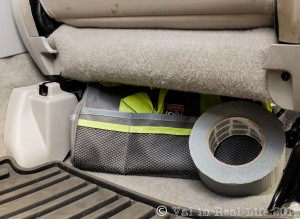
    Tools and duct tape stashed under the passenger seat for quick access. Normally the tape lives in the spare tire well which becomes hard to access when we're fully packed.
    Tools and duct tape stashed under the passenger seat for quick access. Normally the tape lives in the spare tire well which becomes hard to access when we’re fully packed.
  • Jumper cables: You’d be surprised how often I use these. Having them on hand has saved me countless hours of waiting for help as well as allowed me to get other folks back up and running quickly. Again… knowing how to use them is important.
  • Roadside Assistance: Having that monthly or annual fee for roadside assistance seems pointless and aggravating when you’re not using it but having that resource when you’re in trouble is priceless. When you factor in the cost of a single tow service against a minimal fee, it quickly becomes worth it. I travel with much greater peace of mind of knowing that safety net is in place and that with one phone call I can get the help I need.
  • Owner’s Manual: Make sure you’ve keep your manual on hand and you won’t be left guessing and scrambling for simple things. It’s the ultimate, easy reference on how to change a lightbulb or fuse or even do some quick trouble-shooting so you can assess the seriousness of an issue.
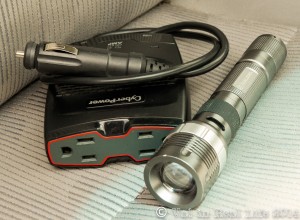
  • My Goal Zero flashlight lives in that car at all times and can be recharged via a USB cable I can plug into my power inverter... which also always stays in the car.
    My Goal Zero flashlight lives in that car at all times and can be recharged via a USB cable I can plug into my power inverter… which also always stays in the car.
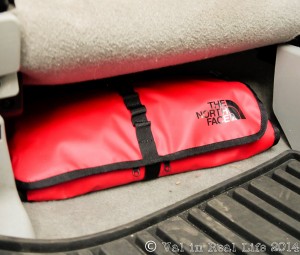
    My large first aid kit gets stashed under the drivers seat when we're fully loaded so we have unimpeded access in case of emergency.
    My large first aid kit gets stashed under the drivers seat when we’re fully loaded so we have unimpeded access in case of emergency.

    Emergencies…

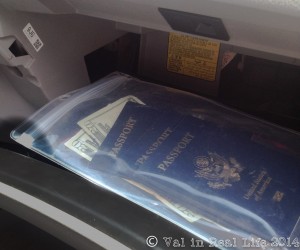
    Extra cash and passports are easy to throw into the glove box.
    Extra cash and passports are easy to throw into the glove box.
    • First aid: I keep an extensive first aid kit in the car at all times but I always give it a once-over before a big trip to replenish often-used supplies like adhesive bandages as well as check expiration dates. The biggest point I can make here is that having a first aid kit is useless, and possibly harmful, if you don’t how to properly use what’s in it. Build your kit based on your current knowledge and seek out more training to build your skills.
    • Glove box stash: I always keep an old wallet in the glove compartment that holds the extra stuff I don’t need to carry on a daily basis. It’s my of stash essential items like my auto registration, insurance card, and my roadside assistance info. I also carry an old driver’s license and spare credit cards. In the case of a lost wallet, having these on hand goes a long way. Without them you can find yourself quite stranded and helpless. In addition my extra little wallet, on long road trips I also carry our passports and some emergency cash in a heavy-duty waterproof pouch which stays locked in the glove compartment.
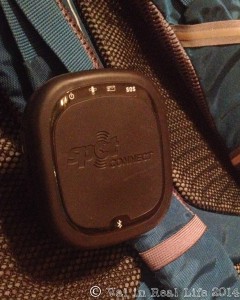
    My newest addition, the Spot Locator will give me emergency communication options, even without a cell phone signal.
    My newest addition, the Spot Locator will give me emergency communication options, even without a cell phone signal.
  • Flashlight:Having a flashlight in the car at all times is one of the most useful things I know. I’m partial to my Goal Zero since I can keep recharging via a USB cable and not have to worry about batteries.
  • Tools and tape: I keep a roll of duct tape in the spare tire well as a general practice. You just never know when you’ll need to MacGyver something, whether it’s outdoor gear, a broken window… you name it, duct tape can save the day. I also carry a small multi tool everywhere I go for the same reasons but for these longer trips I also add a small, basic tool bag to the mix.
  • Spot: My newest addition is a Spot Locator device. Going into areas where I can’t count on cell signal, it’s my emergency lifeline should I find myself in a difficult situation.
  • Big picture…

    Let’s face it, no matter how much planning you do, things go wrong. These measures are really painless to put in place but go a long way when you’re in a bind on the road.

    I’m sure I’ve missed some other great road trip essentials so tell me what I’ve missed. What are your go-to tactics for pre-emptive damage control?

    And now for your moment of green…
    Subaru Forester by open range sign in Nevada
    With my road trips essentials in place, I’m ready to go free-range in the adventure-mobile.
  • Going Caching: Georgia’s Geocaching Mega-Event

    Going Caching: Georgia’s Geocaching Mega-Event

    Anyone who follows the adventures of Camp Granola knows we’re nuts for geocaching, even going so far as to drive across the country to geocache the E.T. Highway.

    It’s always a thrill to meet Signal, the Groundspeak mascot.

    Sometimes I sound like a broken record, always talking about the benefits of using geocaching to explore the world around us. Aside from the intriguing places this sport takes us though, it’s also a wonderful community of people to be a part of… especially when hundreds of us get together for what’s known as a mega-event.

    The most famous geocaching mega-event is probably GeoWoodstock but we’re partial to Georgia’s Going Caching event that happens each fall. For the past two years the event has been held at the wonderful Skidaway Island State Park near Savannah. For those events, hundreds of geocachers descended upon Georgia’s coast to embrace a weekend of pirate-themed geocaching madness including activities such as a pirate talent show, a nighttime pirate booty treasure hunt, a screening of Pirates of the Caribbean… and of course, pirate-themed geocaches.

    But the good folks of Going Caching are mixing it up this year with a History and Mystery theme that will be taking place at FDR State Park near Columbus, GA.

    Fred getting his fortune told at the 2012 event.

    What to expect…

    Chow time at Going Caching 2012.
    • To be obvious, lots of great geocaching: Over 100 new geocaches will be hidden in honor of the event and there are event-only challenges to be had as well.
    • Food: Joining your fellow geocachers for meals is optional but highly recommended. It’s a great time to meet everyone while they’re not rabidly chasing caches and tackling challenges.
    • Activities: GPS accuracy contest, vendor booths, kid’s adventures, geocoin and pathtag trading events, and a flash mob, just to name a few.
    • New friends and community: Throughout the event, you’ll meet friendly faces of the geocaching community. Trust me, they’re a welcoming and charming bunch, ready to embrace geocachers of all levels so don’t be shy even if you’re new.
    • Raffles, prizes, and silent auctions: These will be held throughout the event and there are many opportunities to win.
    • Volunteer Opportunity: One of my favorite parts of geocaching are CITO events. It stands for “Cache In Trash Out” and again this year a CITO event has been arranged in conjunction with the mega-event.

    More info…

    Even our disapproving beagle loves Going Caching events.
    • The event itself is technically only Saturday, October 19th but associated events will be taking place from Thursday (October 17th) through Sunday (October 20th).
    • Be sure to get your swag items early since they can sometimes go quickly… plus the online store closes Sept. 19 for all event and meal tickets. Don’t wait!
    • For added fun and getting to know fellow geocachers, order Cache Cards that are part trading cards and part game pieces. (Hurry! Deadline is August 31st.)
    • Because of the popularity of this event, the campground at FDR State Park is already sold out for the weekend. There are other nearby lodging options though including camping and cabins at Pine Mountain, the Mountain Creek Inn at Callaway Gardens, and Meriwether Country Inn. (Mention the Going Caching event when you make your reservation at either hotel for the event discount.)

    For more info on the event, the location, and geocaching in general:

    Unfortunately, I have a conflict this year so I won’t get to be in on the awesome but be sure to say hi to Fred and George who will be in attendance.

    George triumphant after a nighttime treasure hunt challenge at Going Caching 2012.
    Fred getting a lesson in piratese at Going Caching 2011.
  • Camp Kids

    Camp Kids

    As you well know by now, we go camping. A lot. One of the elements of our adventures that helps things chug along is that I put my kids to work. I put them to work at home too, but that’s another post.

    At any rate, we just rounded out a 5-week camping adventure covering 18 states, one Canadian Province, and over 6,000 miles as we journeyed from Geowoodstock to TBEX and back to Georgia. While I obviously have a ton to share about that, I thought I’d start with how Fred and George help out…or how I attempt to empower and engage my little campers-in-training. (Cue granola-mom cheer with pom-poms…)

    Laying the groundwork…

    To be frank, if I let them, they would totally slack off and not help at all…which they have been known to do when I’ve not enforced camp chores. I’ve pretty much always had them help in age-appropriate ways even if it’s something small or even if it’s just taking care of their own belongings. It just sets the precedent that they need to help. Of course when they were littler, their duties were shorter and simpler but as they’ve grown and their capabilities have improved, I’ve slowly upped the ante.

    Why do they need to help?

    Oh so many reasons but let’s hit the big ones:

    They’re not whistling while they work but they are helping.
    • Pressure relief: If I’m doing every task, not only am I not going to enjoy the trip, I’m not going to have time to take them anywhere beyond camp. Might as well not even leave home.
    • Engagement: Working on projects together engages them and makes them pay attention to what’s going on around them. Eventually they even develop a sense of what their role is which leads to a grounded sense of self-worth.
    • Empowerment: All the “grown-up” jobs Fred and George are doing? Well, those are some mad skills they’re developing. Each new one they master let’s them build to the next step and eventually they’ll be self-reliant adults. I’m not interested in raising Boomerang Kids and these activities are life skills they can translate into all sorts of other arenas.
    • Paycheck: I buy my kids very little at this point in their young lives beyond the basics of food and clothing. They help out, they get paid, they get money to buy stuff. Pretty simple formula. And yes, attitude and quality of service effect their income.

    Getting down to business…

    So now that we’ve got the nebulous, why-making-my-kids-work-is-so-great stuff out of the way (and made myself sound like a total task-master of a mom!) let me put my pom-poms down and get real. (‘Cause you know that’s what we do here at Val in Real Life.)

    In camp life, there’s always the initial entry surge of camp setup. If you’re rolling in late or hurrying to set up before bad weather hits you, time is of the essence so that’s when it’s particularly important to have a well-trained camping “pit crew.” This is also crucial if you’re the only adult which was almost the entirety of our last trip. Juggling camp duties, kids, dog…and still being able to enjoy yourself pretty much hinges on the worker bees pulling their weight.

    The first order of business when entering camp is always getting the tent pitched and bedding in order. Shelter is king right? After we’ve settled on where to pitch the tent, that’s when Fred and George get to kick into high gear as helpers. They get to switch to low-gear once we’ve got our Home Sweet Home constructed.

    In spite of his sourpuss face, George reports that helping with the poles is one of his preferred camp jobs.

    Here’s just a short laundry list of camp chores we have just to give you an idea of the possibilities:

    1. Fetch little Gofers!: Fred is now tall enough (as tall as me in fact) to unload the roof box where we keep the tent, mats, and bags in transit. Before he was tall enough I would just toss everything down and let him take it from there. And by take it from there, I mean turning them into little “Go-Fers” and having them tote gear from car to tent. Sleeping bags and mats are light enough for even very little campers to handle. Fortunately my minions can now handle even our monster-sized tent, heavier chairs, etc. as well as unpack and repack them.
    2. Washing dishes: I still do the actual washing since their idea of “camp clean” is still well below mine. (Trust me, not pretty. We’re working on it.) They can however, rinse, set things out to dry, tote buckets, and help put things away.
    3. More Go-Fering: There is basically always something that can be fetched during the trip. Make use of your little helpers…it saves you more time and hassle than you can imagine. They eventually learn where things are kept so you don’t have to go through the painstaking instructions of where to find the item in question each time.
    4. Cooking: I haven’t set Fred and George loose on the camp stove or campfire just yet but trust me it’s coming. For now, they’re just my little assistants, honing their Gofer talents.
    5. Helping themselves: At the very least, I push them to take care of their own belongings and basic needs. The important part here is to set them up for success. They can’t get their own drinks or snacks if the food is inaccessible. So once we’re at camp, I keep the cooler and bins set up so they can manage it themselves.
    6. Give them a niche: I’m a fan of giving kid’s their own special job. Fred is typically the “Chair Dude” and George has become quite and expert bag and mat arranger. Once they find their niche, make it their job every time. Let them be the expert at their task. The caveat is that they will probably want to change things up at some point. Great time to train them on their next niche. George has now migrated into helping install tent poles.

    But Val, my kids are toddlers…

    Perfect! This is absolutely the best time to to get them started…when they actually get excited about helping and beam with pride at their accomplishments. Again, gauge your requests and expectations based on your kid’s abilities. Keep in mind, they might do it slowly (particularly the littler they are) and they might not do it exactly how you would do it, but give them the chance and don’t nit-pick. Give them a little help the first couple of tries to show them the ropes but after that, unless there’s a glaring problem, let them do it their way.

    And yes, at any age, it is a process to establish a camp helper rhythm. That process requires time, patience, and consistency…the parenting trifecta if you can reach it.

    Now for the rest of the story…

    If I’ve portrayed our camp life as a paradise complete with kids whistling while they work, so sorry to mislead you. I’ve laid out the premise but I’m going to get even more real now.

    Fred in action, helping roll up Big Agnes.

    In truth, sometimes Fred and George blow me away with their cooperation. Fred even asked several times on our last trip if there was anything he could do to help. The fact that my jaw landed on my boots should tell you that’s not a regular occurrence. My thoughts range of course from “Is he feeling ok?” to “Whoa, I’ve got this parenting thing going on!”

    More often though, they form The Resistance and I have to drag tasks out of them. They even like to vary the level of attitude so I never know what to expect. It’s a pre-teen conspiracy designed to test my sanity. If I can channel the depths of my granola mom self, we can usually work through it without too much gnashing of teeth. If I can’t, our trip doesn’t get off to a great start. The good news is that after the push to get camp set up, the bulk of the pressure is off and we can get to the funnest parts of camping.

    The world according to Fred and George…

    In the midst of writing this post, I asked them their thoughts on camp chores. They let loose with all sorts of disparaging comments on the horrors of my tyranny. Big surprise. (Side note: the teenage years are going to be a blast…)

    What they don’t know is that their behavior is giving them away. They may protest but I see the sense of satisfaction and growing maturity that comes with being challenged. I see their abilities growing and the confidence that comes with it. I see that they don’t act as spoiled and self-centered when they’ve been a part of the process. So that’s the private little conspiracy I have to combat The Resistance! And as long as I don’t let on, all is good.

    So what do you think? Do your kids help out at camp?

    And now for your moment of green…
    More help = less time setting up camp. Less time setting up camp = more time for what you came for… THIS.
  • Geocaching 101

    Geocaching 101

    NOTE: I initially wrote this as a guest post for Our Days Are Just Filled but obviously it fits here quite nicely as well. Plus I left out an important aspect of geocaching in the original so I tacked it onto the end here…enjoy!

    Our enthusiastic but freezing little cacher at a guard rail find on a bitter winter day.

    Welcome to Geocaching 101…

    Some of you out there in cyberland may be very familiar with geocaching, but if you’re one of the folks who aren’t in on the game, here’s a quick primer.

    A small cache we found recently near a golf course.

    In a nutshell, geocaching is a high-tech treasure hunt played with a GPS. You use coordinates to track down a cache and sign the log. You then post your find to your account online and watch your collection of smiley faces grow.

    There are over 1.5 million caches hidden all over the world in an amazing variety of imaginative places, from your local parking lot to the deep wilderness (yes including Antarctica). These “hides” come in all shapes and sizes. From a “nano” the size of a pinto bean on up to creatively disguised large boxes, they can look like just about anything from a bolt to a birdhouse to well…you name it, someone’s probably done it. Sometimes they’re simply camouflaged in duct tape and hidden under branches, other times you’ll discover seriously creative hides like fake tree branches that you can’t tell from real ones.

    There are over five million geocachers playing this game/sport. That means the rest of the population are what geocachers call “muggles” or non-players. Therein lies much of the fun because one of the big challenges in geocaching is not drawing attention to yourself by muggles as you’re hunting your quarry. This can prove trickier than it probably sounds. Sure you can find caches deep in the woods without attracting prying eyes but many caches are deftly hidden in urban settings like parking lots where being inconspicuous is no small task. So if you’ve ever noticed someone lifting a lamp post skirt you now know what they’re up to…just turn a blind eye or give them a little wink.

    So how does this work?

    You can start with a free account at Geocaching.com. That’s where the cache information is and where you’ll log your progress. Each successful find earns you a smiley face where the cache is located. [Note: There’s also a new upstart site called opencaching.com but since I don’t use it I can’t speak to it’s worthiness. Feel free to check it out though. And hopefully some commenters out there will help out and fill in the blanks for me on the matter.]

    One of our first-ever finds, you’d be amazed how easy it is to walk right by and not notice it.

    Given all of the potential ways, places, and scenarios to hide a cache, each one is rated by its difficulty and terrain by a star system. The rating system is quite handy in helping decide which caches to tackle and when. A park and grab under a lamp skirt at the local store is likely to be a 1 or 1.5 difficulty and a 1 terrain…easy enough for even the little cachers to grab or a quickie on your way home from work. But as the “hiders” up the stakes in terms of how well-camouflaged the cache is and how difficult it is to get to, you’ll see those ratings go higher and higher…which means those caches will take more time, energy, and planning to successfully grab. These “evil” caches can be in some crazy places…cliffs, underwater, up towering trees…you get the idea. Or they can be just so cleverly disguised that their difficulty is 4 or 5 stars but the terrain is only a 1. Like I said, huge variety. But that’s a good thing. It means there’s something for everyone.

    And while many caches are one-shot grabs, there are many other kinds of caches as well like multis & puzzle caches (among others). Multis are just what they sound like in that there are multiple stages to the final glorious find. As well, puzzle caches are aptly named. You may have to solve sort of puzzle/mind-game to get the correct coordinates or figure out something once you get there but either way, it’s an added challenge that is always welcome at Camp Granola.

    What’s in it?

    For the smaller caches you’ll find only a log to sign since there isn’t room for anything else. The larger ones will have everything from little toys and trinkets to trackable coins and tokens. The understanding is that if you take something, you leave something of equal or greater value. The trinkets are how I initially lured my little cachers on the hunt but now that they’re older, it’s things like GeoCoins, Travel Bugs, and Pathtags that put a sparkle in their eyes.

    Right smack in the center of this shot is a geocache. Can you spot it?
    See it now? That’s a bison tube. You’ll see lots of those in your geocaching adventures.

    Who can play?

    Geocaching is available to all ages, shapes, and sizes. You can have a fancy GPS or a simple GPS…or even no GPS and you will have all the adventure and fun every other cacher is having. As I mentioned, given the wide range of difficulty and terrain for caches, this is s sport/hobby that accommodates all ability levels.

    Why play?

    First, it’s just fun. Each find is like scoring a goal or landing a fish, you get a sense of accomplishment. It’s a great challenge that gets you outdoors and it doesn’t get better than that in my book. It also takes you to locations you wouldn’t have gone otherwise and you end up discovering surprising new places and things to do. Sometimes you even find out a little more about your world and how it works. Much like photography, geocaching helps you develop a keen eye and the ability to set assumptions aside so it’s a great mental workout. Plus, when you’re traveling about, there’s never an excuse to be bored when there’s always a hunt to be had.

    A bonus for parents of little cachers is that it’s an invigorating family activity. All of the reasons I love caching for myself, I love doubly so for Fred and George. Hand them the GPS, let them lead the way, and you’ll have some sharp kiddos on your hands. Geocaching demands several skills from them simultaneously and it’s a treat to watch them work through the hunt. It’s real-world problem solving at its best because they’re having fun. And it isn’t just for homeschoolers…it’s catching on as a tool in mainstream education.

    Here’s a geocoin. It’s the one I set loose on my 40th birthday. You can track their progress online as they travel from cache to cache.

    Getting started…

    As you can see, there are a lot of facets to this sport. I’ve only scratched the surface. If you’re intrigued by the notion, the best source for getting started is the probably over at Groundspeak’s Geocaching 101 FAQ and/or Geocaching in 2 Minutes at Geocaching.com. You can also check out How Geocaching Works from the folks at How Stuff Works.

    The next best step is to go with someone who knows the ropes. If you don’t know an active geocacher, find a local geocaching group. We geocachers are a friendly lot and welcome the chance to show new cachers the ropes. There’s a treasure trove of new friends to be had out there.

    The tired but happy cachers after putting in a full day of hunting AND trash collecting.

    My personal PSA…

    I wouldn’t be the Queen of Camp Granola if I didn’t urge outdoor sensitivity when caching. Be sure to Tread Lightly when caching in the wilderness. I would add that taking care in urban environments is crucial as well. Many a shrub, fence, sprinkler head, etc. have been destroyed by overzealous hunters which isn’t fair to property owners and undermines our group as a whole. Let’s keep a good name for ourselves so people love having us around.

    Helping out…

    I failed to include this on the post for Our Days are Just Filled but one of the great facets of geocaching is the CITO, or Cache In Trash Out, movement. It’s exactly what it sounds like…you collect bits of trash as you cache and get them into trash cans instead of floating about the landscape. So simple yet so effective!

    Cache on friends!

    mushrooms - cloudland canyon - val in real life
    Go geocaching and discover the amazing details around you.
  • Car Camping 101

    Car Camping 101

    I’ve been car camping a long time. My setup and who I travel with has changed dramatically over the years but I’ve certainly earned my stripes in the camping-with-kids arena. Here is some fundamental advice I give to aspiring campers, especially those with kids.

    Like anything new, a little up-front education greatly improves your experience by simply avoiding some common mistakes or misconceptions about what to expect. This is just a starting point, of course. Use these tips as a primer and do some homework before setting out. There’s lots of great advice out there. Soak it all up and give yourself solid start before your first trip.

    Camp Life
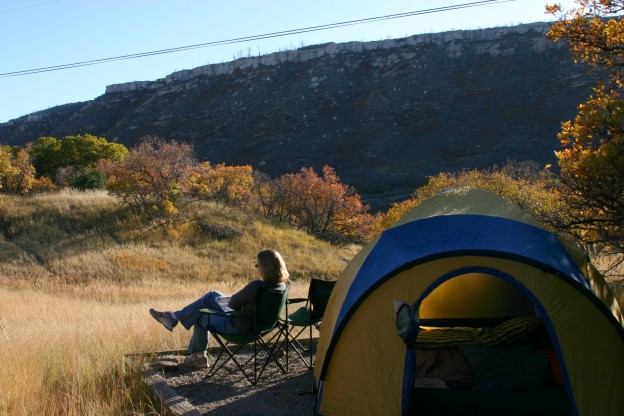
    Camp life at Mesa Verde National Park.

    8 Tips on getting started

    Rather than give you an exhaustive guide, I’ll just throw out some general pointers as you plan your first adventure. This is geared towards the aspiring car camping family (as opposed to RVs, teardrops, or backpacking) since that’s what I know best with kids in tow. Other camping styles are very different beasts in terms of getting started and require different advice. So for you car camping wannabes, here goes:

    Keep it simple!

    Don’t try to bring all the comforts of home, you’ll just be frustrated trying to deal with unnecessary fluff. The point is to get away from all those complications, isn’t it? So don’t overdo it by trying to create a home-away-from-home. Make the most of the change in scenery and let camping be different from your day-to-day life. Not to mention, anything you pack for the trip has to be unpacked when you return. Don’t make more work for yourself, it takes the fun out the whole process.

    Make a checklist

    You don’t want to forget something crucial. We’ve done it, it stinks. Until you’ve got your camping groove down-pat, your list is the ticket to a smooth journey.

    Camp Life - Grand Canyon
    Sometimes you get visitors. Always be aware of how to deal with wildlife in the area.

    Stay local

    For your first adventure, you’ll be doing enough just to get the whole family out of the house so keep the drive time short. Plan on rolling into your site with plenty of time to set up camp and get dinner completed before dark. Also, I highly recommend state and national parks over commercial campgrounds as a general rule here in the U.S.

    There are some very nice private campgrounds but by-and-large I find the state and national parks to be more peaceful, provide easy access to trails and educational programs, and to be less expensive.

    Quality gear is key

    Do not skimp. This is your home for the duration of your trip! If your gear sucks, so will your trip.

    For example, if your sleeping bag doesn’t keep you warm and you spend the night shivering and sleepless, you won’t have fun and you’ll probably never go camping again. But don’t blame a bad experience on the destination if your gear is what fails you.

    With that in mind, quality gear can be expensive. If you’re just starting out it makes a lot of sense to rent and borrow whatever you can, not only from an expense standpoint but also to get a feel for the ins-and-outs of different gear before you invest. It’s always better to rent or borrow quality gear than to own inferior products.

    Gimpy Camper
    Even gimpy moms can go camping and have a good time.

    Know your gear

    Always test your gear before you’re on your trip. You don’t need the surprises of missing or malfunctioning pieces when you’re miles from anywhere to fix the problem. That can ruin a trip. You also don’t want to be struggling with learning how to use equipment under the pressure of getting camp set up or dinner made.

    Don’t be afraid to get dirty

    But keep the dirt out of your tent. Getting dirty is one of the joys of camping, especially for the kids. But keep the dirt out of the tent if you want to sleep. Grit in your sleeping bag makes for a very uncomfortable night. Make sure everyone is brushed off or wiped down for a good night’s sleep.

    Bring something to use as a doormat as well as teach the kiddos the butt-in-feet-out trick. Just have them sit inside the door of the tent but leave their feet outside while they take off their boots and brush off excess dirt. (But don’t leave boots outside since creepy crawlies often decide to make it their home for the night. Designate a spot inside the tent near the door to stow them, as dusted off as possible.)

    Let them help
    Let them help. It’s all sorts of family bonding goodness.

    Get the kids involved

    In other words, put them to work. Even little campers can have jobs and they typically relish the chance to help. It fosters independence and problem solving. Plus they usually love to be involved. The excitement of camping seems to bring out the best in kids when the parents stay relaxed and flexible.

    Go with friends

    Not only is camping together a great friendship experience but buddying up on supplies can save space and sharing meal prep duties between families reduces work for everyone.

    The wisdom of experience

    I wish I could say we had all this figured out from the start but alas, it took us many years to find our camping groove. A lot of this seems like a no-brainer but you’d be surprised by the mistakes even experienced campers make.

    This isn’t an exhaustive everything-you-need-to-know list but keeping these things in mind can be the difference between a frustrating, miserable trip and igniting your family’s passion for the outdoors. It’s a short step outside of your comfort zone into a whole new world. Enjoy!

    When camping, be sure to know your green and stay away from trip-ruining nasties like poison ivy.