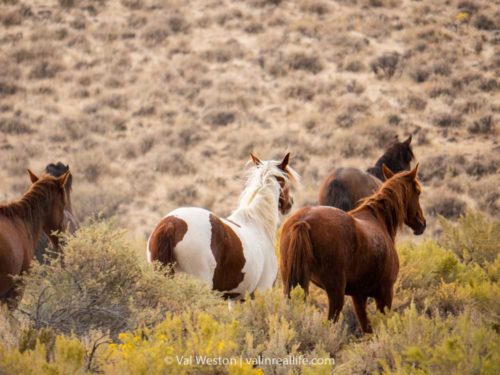
I’m going for double the fun this week—golden grasses during golden hour courtesy of Wild Horse State Recreation Area in northern Nevada.
Just like last week, I knew immediately which image in my library conjured up my feelings of the theme. This is another image that simply makes me feel calm and peaceful. Part of it is the magic that is Golden Hour.
It’s one of the basics of photography that gets pounded into your head even in amateur workshops. And it’s why our field sessions happen at the beginnings and ends of days. Catching the low, soft light on the edges of the day is a lot of what makes a compelling image.
But even non-photographers love golden hour light even if they can’t put their finger on why. Much like our brains like curves, Golden hour light is naturally appealing to our senses regardless of photographer status. The science behind it is pretty cool and you know I love me some science nerdery.
In the case of this image, the colors of the grasses combined with the low Golden Hour sunlight create a sepia-toned monochromatic effect without me adding anything to the mix in post-processing. So that’s the golden double-your-pleasure bonus.
I made this image back in our full-timing days during one of our stays at Wild Horse State Recreation Area north of Elko, Nevada. It one of our favorite front-country camping spots of all time.
Despite the challenges we were facing at that time, I was able to spend a good amount of energy photographing the beauty there. And this golden-laden image is one of my lasting favorites from that time.
Peace out!
Share your thoughts in the comments below!
Bluesky Art Show
This post is inspired by the Bluesky Art Show, a challenge to share artwork surrounding a weekly themeeach Saturday.
Here at Val in Real Life HQ, our winter holidays are low-key. We like to celebrate the season in our own simple way, outside of the hype.
What that looks like varies a bit from year-to-year. Especially since going on the road and riding the roller coaster that eventually landed us in New Mexico. Before that chaos though, one of my favorite holiday memories is the first time I harvested a wild tree in Nevada.
It’s fairly straight-forward to get a permit from the Bureau of Land Management and head into the desert to pick a tree to bring home. But the process of going into the wild to find, cut, and bring the tree home was more purposeful and thoughtful than my previous experiences of heading to a tree lot. It felt richer.
On this day, the desert was still and quiet after the soft overnight snow. Calm. Peaceful. We took our time selecting a handsome tree and enjoyed the rugged beauty of winter in the desert. It was magical.
These days we’re chronically over-extended with work. So I often neglect to capture these moments I want to remember forever and not trust only to memory. You’d probably think it comes as second nature to me. Not so much these days.
This little trip down memory lane is my reminder heading into the new year to take more time for capturing these moments.
Happy New Year, friends! Let’s see what 2026 has to offer.
Bluesky Art Show
This post is inspired by the Bluesky Art Show, a challenge to share artwork surrounding a weekly themeeach Saturday.
That’s the question a neighbor asked us upon returning to camp after a long day away in town. Imagine our confusion. Because well, no, in fact we don’t.
We’d exited early that morning to drive the 70 miles to the nearest sizable town. We needed better cell service to participate in a virtual meeting, visit the laundromat, resupply groceries quite unexpectedly, and run to the hardware store for some unfortunate trailer supplies. We were ambitious enough to think we’d be able to get in a shower too. Silly us. Something had to give.
But let’s back up a bit.
Oh, why hello little “friend.”
The visitor
We’re camping at Great Basin National Park at the moment. A couple of days ago we ventured into the small town of Baker, Nevada to mail a Sierra Mountain Passes order. We arrived back “home” to a little surprise. An uninvited visitor had clearly been partaking of our hospitality.
Our chipmunk friend saw fit to chew through a window screen and make itself at home. Finding no buffet waiting, it decided not to stick around for our return. Or so we thought.
Over happy hour, I joked with my dear man that with the exception of a small screen hole to repair, our unexpected visitor left only footprints. How very Leave No Trace of it.
We thought it was a simple situation with the first hole.If only it had stopped at leaving footprints.
If at first you don’t succeed
Our little friend decided to visit again the next day while we were gone handling all of the above-mentioned, tiresome tasks. Try, try again it did after not succeeding in a feast the previous day. We anticipated another visit from it, though, knowing they’re persistent little buggers. So we made sure all the windows were closed before we left.
Our camp neighbor walked up to us after we pulled in that afternoon and asked us that question. He said the chipmunk was sitting in the window for a long time chewing on the screen. We looked at the window and saw the shredded carcass of what was once our bedroom screen. He showed us cell phone pictures of the critter sitting in our bedroom window. We were flabbergasted.
It took some time to process and comprehend. We still had so much more to wrap up before we could relax for the evening—perishable groceries in the truck as well as not-entirely-dry laundry. And now this. We almost didn’t know where to begin dealing with it.
We cautiously opened the trailer door expecting a panicked chipmunk to lunge out at us, likely going for our jugulars. Nothing. We inspected around the bedroom and obvious areas. No chipmunk.
It left more than footprints this time, of course. Droppings, urine puddles, and the destroyed screen were part of the offerings. Along with a ravaged cabinet face that we deluded ourselves was its exit point.
The battle weary screen in the bedroom.The little chipmunk had to be terrified. It was clearly quite a battle to get out of the trailer.The little critter went apeshit on the screen.
We were wrong
We tended to the tasks of putting away groceries and laundry, eagerly anticipating a well-deserved happy hour. But first I swapped the destroyed screen for the only other matching one in the trailer so we didn’t have to choose between having the bedroom window open with no critter barrier overnight—if even a flimsy one—or sleeping in the equivalent of a sauna.
Feeling like we had averted the crisis, we set our sights on happy hour. First I strolled to the pit toilet, though. Walking back towards the trailer I noticed the bedroom screen looked funny. It was probably the 20th are-you-fucking-kidding-me moment of the day. The screen was chewed through. Again. In less than an hour.
If I were a cartoon character, I’d be the one with the exploding head. That’s what it felt like when the realization hit me.
Happy hour would have to be delayed. We desperately went through another round of digging through the trailer looking for the intruder. Tearing apart the bedding and mattress, looking through cabinets, and so on. No chipmunk. Well, surely it left this time. We convinced ourselves that the new hole was its gateway to freedom and the saga was over.
The bedroom window was the scene of much drama.In less than an hour, the bedroom screen was violated again.Our chipmunk friend tried to help us with some remodeling. Gives the trailer that lived in look, don’t ya think?
We were wrong again
The next morning we awoke to the Adventure Dog being unusually animated. We assumed he just needed to go out for a relief session but his behavior was a bit off. My dear man took him out and came back to bed. Moments later we heard a commotion in the kitchen. Our stainless steel cocktail glasses make a distinct sound. We knew something was in the sink. We thought it was a mouse. (More on that in a bit.)
We jumped out of bed and saw the chipmunk scrambling towards the rear window of the trailer, looking for an exit. It had none and, startled by our arrival, dove beneath the bench. We hastily threw on some clothes and I raced out the door to the back of the trailer to open the toy hauler ramp.
We yanked up the rear screen to give it a clear exit, pulled off the bench cushions and lifted one bench. It ran under the other bench. We lifted that one. The frightened animal was cowering between my riding boots and my camera-gear backpack. We swished it out with the broom and it frantically ran to freedom.
It was not exactly a relaxing morning. We were so baffled how it kept getting in. In reality it never left. It’s just an expert at hide-and-seek.
At happy hour that evening, my dear man said “I think now I understand why some people don’t like camping.”
Our MacGyver-inspired repair.Yet another MacGyver repairThe rodent exit ramp.
Because the prologue to the chipmunk drama is that we’ve been battling a mouse invasion for over a week now. That was the driving force behind the need to make the big trip to town to resupply compromised food and buy more mouse traps and other deterrents.
We know we need to get under the trailer and start sealing up entry points. Yet another big job to do and there are only so many hours in the day. And we’re worn out.
So no, definitely not living the dream yet. Send more whiskey, please. This was definitely not in the brochure.
We scored the best site in the campground. Gee, if only we could actually enjoy it instead of battling rodents.
“Hey babe, what would you think of taking a flight in a 1928 airplane?” he says, only about a half a cup of coffee into our morning.
“Um, sure” I say groggily. Then my brain woke up. “Wait, say what now?!? That sounds like a death wish.” I reply. Picture the horrified look on my face for full effect. Of course, at that point I’ve only entertained the question in the most theoretical of senses. Then it occurred to me that it might not be.
Nope. It was not a theoretical question. “No, it’s a Ford Tri-Motor. I’ve always wanted to fly in one and they’re offering flights in Reno today.”
Embracing spontaneity
And thus began my day a few months ago as I found myself unexpectedly packing up some minimal camera gear and driving to Reno to fly in a 90-year-old airplane.
That was not the original plan for the day, as you’ve probably gathered. And you know I’ll keep it real. I was kind of scared. It sounded terrifying.
On top of the what-the-hell-am-I-getting-myself-into factor, I wasn’t completely sold this was the best way to spend my time that day. I’m simply not an airplane aficionado and I was quite buried in other pressing life and work tasks that needed my attention.
But I’m no stranger to embracing spontaneous opportunities. Keeping your bucket full is all about recognizing the things in life you probably shouldn’t pass up. I didn’t approach it for the curiosity at first, though. Being someone who is in ever-present work mode, I thought “Ok cool, my dear man is so stoked about this and it would be a really unique photo op. ”
Flying back in time
Little did I understand how cool it would be. Once I had some time to understand a bit more about the Ford Tri-Motor, I became intrigued. The historical importance completely roped me in. I had no idea!
The airplane is unique and gorgeous with its square shape and corrugated body panels. Its exterior controls are both amazing and entirely frightening. The old-school interior is a step back in time. The wooden paneling, the gloriously retro light sconces, the decorative curtains, the huge windows that allowed you to take in the whole view—I adored the details and textures.
The flight itself was amazing. I’ve seen Reno from the air countless times as I’ve flown in and out on commercial flights. But this—a low-altitude loop looking through the blades of the wing-mounted motors, was entrancing. It was a totally visceral experience unlike commercial flights. It’s much like the difference between the joy of riding and the monotony of driving in the bubble of a car.
Holding on to the magic
Serendipity struck just a few days after my Tri-Motor experience when I read a great bit by my Tremont photography pal Steve Zigler about holding on to the magic of travel after you return. I realized that this is one of the ways you do it. You bring the spirit of travel home with you and apply it to your daily life. You give yourself the chance to see your hometown in a new way.
I had no intention of extolling the virtues of the 1928 Ford Tri-Motor airplane on the blog. Yet some experiences just stick with you. So here, almost three months later, I’m still in love with taking the leap that day.
I thought this odd little day in my life was worth sharing. The larger message of keeping the travel magic alive in your daily life is important, of course. But also to be deliberate with how we spend our time. Even with a spontaneous decision, it was deliberate. Although it took a much greater infusion of coffee to figure that out!
One of the decision points that morning was also acknowledging the value of a unique shared experience with someone very important to me. Even though it’s not something I would have sought out for myself and he would have had a good time on his own, sharing it together elevated it for both of us. The same as our travels together do. It allowed us a double-dip on keeping the magic alive at home at a time when we were working almost non-stop.
Flying over Reno in the 1928 Ford Tri-Motor.
And finally, I would be remiss if I didn’t encourage you have a take in this particular experience. It was so unique and thrilling. The plane is on tour in the U.S. if you’d like to catch a ride. It’s well worth it!
Adventure on, friends!
[UPDATE: I originally called this a 1929 but it turns out this is a 1928 so the post has been updated to correct my mistake. Please excuse my aviation ignorance!]
Four months without a rain drop. Now a storm was finally coming in. A big one. Soft, diffuse light begged to be honored, courtesy of the now-unfamiliar cloud cover I hadn’t seen in months.
I hastily packed up my photography gear and told myself I needed to get in a few hours of shooting. The textures of historic Virginia City and wild horses in the sagebrush were in my sights. Yet my to-do list was screaming at me and my head had already scheduled every minute of my day to address its tasks.
The chance to photograph horses in the rain is rare, though, especially so close to home. I would regret letting it pass by, not only for the unique weather, but more so for not living my values and not reclaiming the things I have let slip lately.
I could spend days shooting the colors, textures, and angles of Virginia City.
Into the storm
So I set out, camera pack nestled in the passenger seat as I quickly slalomed the curves of Six Mile Canyon up to Virginia City. After a couple of hours stomping around soaking up the textures and colors of C Street’s gritty historic boardwalks, I descended from the hills to find the horses in the valley below.
The storm was approaching slowly. It was menacing and powerful, almost taunting, as it crawled towards me. Yet cloud-dappled sunlight bathed the edge of the hills. Sure enough, the horses were easy to find. A large herd grazed cautiously in the sagebrush, carefully eyeing the approaching tempest.
Even with 600 mm of focal length to work with I couldn’t get close enough from the car to truly capture their spirit. I would have to set out on foot. I approached slowly, of course, and not too close. They are wild animals, after all, and respecting their space is crucial.
They grazed, faces buried in the brush so that I couldn’t get a decent shot. The air was utterly still—the calm before the storm. I began to think my excursion was worthless. Then the wind arrived in a sudden gust. The horses all turned their backs to it. It was no surprise but now all could I see was horse asses. Feeling frustrated and deflated as heavy raindrops pattered the thirsty soil, I lingered a little longer to simply admire them before walking slowly back toward the car for shelter.
With my foot an inch from the accelerator I gave them one last forlorn glance; a moment of grief for an unrealized desire. Suddenly they ran, hooves thundering into the hills. That meant a renewed opportunity for me. I followed slowly, tempering my excitement as I navigated the nonsensical web of dirt roads carved into the sagebrush. I caught up with them, securing the best position I could without disrupting them.
So there I stood in the driver seat of my trusty Subaru Forester, muddy boots on the upholstery and my torso sticking out of the sunroof—watching, shooting, understanding. We all considered each other in this surreal place on the edge of the storm. Heavy rain drops pelted us as the sun shone just a few hundred yards to the north and a thunderous downpour obliterated the view of Highway 50, a few hundred yards to the south.
I kept waiting for the torrent to overtake us and end my time with the horses. Hunger and fatigue were becoming hard to ignore but I didn’t want to squander my limited opportunity. I thought of my mentor, Bill Lea, and the time he’s invested in getting to know the habits and behaviors of bears. Countless hours in the field have led him to become an authority on them and helped him create stunning images. If he’s taught me one thing, it’s that this effort requires investment. So I stayed on, cold and wet, to learn about and admire these wild horses.
Not quite the angle I was hoping for.
The fruits of the labor
Five hours after I made the impulsive decision to face the storm, I returned home, exhausted. My stamina is clearly not what it once was or what it needs to be for a day like that. I’m moderately pleased with the tangible results, the photographs. I’m more pleased with my huge leap in understanding the horses and their behavior.
My biggest victory, though, was getting out there and doing it. I stopped making excuses and exercised skills that have been atrophying at an alarming rate. It would have been easier and more comfortable to stay home. But having embraced the opportunity, I know now that it’s always better to stand in the rain with wild horses.
If you have the chance, always stand in the rain with wild horses.
The rider passes under the streetlight, her mount trotting purposefully. It’s the last street light for fifteen miles. Beyond it lies rough dirt road. Yet she’s dedicated to preserving history. The history of the Pony Express.
History at my back door
The Pony Express Reride happens literally on the other side of the back wall of my yard, where my dog plays and I enjoy cocktails in the evening. Little more than a modern decorative concrete barrier separates my property from Fort Churchill Road. That road is the former path of the historic mail route that led the way in changing how information was transferred in the United States.
In my quest to become immersed in my adopted home state of Nevada this fact still blows my mind. To think of the Pony Express riders galloping headlong Fort Churchill Road in pursuit of their purpose over 150 years ago. This is the road that I come and go from daily now in my car and on my motorcycles. It seems incongruous, my easy comings and goings compared to the effort it once took to send documents across the country.
But I love that this history lies just a few yards outside my back door. I embrace the nostalgia of what the Pony Express represents and the progress we’ve made to the modern world we live in. A foot in both worlds, if you will.
The place I call home—northern Nevada—is also Pony Express Territory.
Mistakes
This is not my first encounter with the Pony Express Reride.
Last year I was in the home stretch of driving across the country with George, soaking up Nevada’s Highway 50 at dusk, just east of Austin. We had just stopped off at Spencer Hot Springs for a soak before a last push home. We came across a rider on the highway surrounded by horse trailers and other components of an entourage. Having been on the road all day, coming upon this odd scene didn’t trigger the appropriate connection in my fatigued road-tripping brain.
When I got home and told my dear man about it—wondering what was happening out on desolate Highway 50, he laughed. “Sweetie, that was the Pony Express Reride. They’re due to pass by here tomorrow morning.”
Cue facepalm. And that was only the first of my foibles. By the time they passed along my back wall the following morning, I was so wiped out from the trip, I couldn’t muster the gumption to get up to see them.
A tailgate party Nevada style!
Penance
So this year was about righting those wrongs. We watched the riders’ positions on an interactive map as they approached. Since our back wall prevents us from seeing the road, we packed up the truck with chairs, beverages, and cigars and set out to await the rider’s arrival at the pavement’s end a block away on Fort Churchill Road.
It may be silly to be so excited to see this event. But I love it. I love Nevada. Making the effort to take part in it means a lot to me. There were no bands or fireworks or fanfare. No cheering crowds. Just folks doing something cool because they love it. I dig that.
Every new beginning comes from some other beginning’s end. – Seneca the Younger
In the case of my life in Georgia, the ending was a slow fade rather than a distinct moment. Even though I technically moved to Nevada a couple of years ago, I still had my loft in Roswell to spend time with Fred and George. Having that anchor in Georgia, I was able to slowly move the details of my life to Nevada instead of all in one fell swoop. At the beginning it was a luxury to be able to tackle those details little by little. But after a while that stable anchor became a burden. At some vague tipping point, keeping the loft was a constraint, not a freedom.
The rhythm with the kids there has slowly changed over the last couple of years, too. Now Fred has graduated high school and is heading off to college. Since George is my traveler, he’s willing to go exploring with me much more so than Fred is. This life shift means keeping a home base in Georgia became irrelevant. It was time to let the loft go—along with its financial overhead—to embrace a new way of spending time with George. (With the hope that Fred will join us when his college life permits!)
My cozy sanctuary
Home
I’ve never been one to get too attached to a home. That’s not to say I don’t appreciate or haven’t been fond of the places I’ve lived. Quite the opposite. I cherish my times and memories from those places. But I recognize when something is no longer working and take action to make necessary changes. And so, my life since the beginning of the year has been a juggernaut of wrapping up the remaining details of my existence in Georgia. Flitting in for a few days at a time to get the pieces in place. Or slowly remove the pieces is probably a more accurate way to put it.
It’s been a bit of an ordeal, honestly. In addition to the basic challenges of moving, the process of selling the loft had some additional wrinkles resulting in a bizarre real estate nightmare. With the expertise of my fabulous friend and agent, that scene slowly fizzled to resolution so that the final event this month, the closing, was quite anticlimactic. Throw in a bunch of other random life challenges and the ending was just a footnote. That seems weird for a place that holds such great importance in my life.
But I’d already emptied the loft the month before. Painters eradicated my unique flare for color with bright, clean, white walls. Everywhere. To me it looked bland and uninviting; small and sterile. Not the vibrant and warm place I called home for a time.
And now it’s done. Of course, exiting is bittersweet. My five years in that loft have been wonderful. It’s the only place I’ve ever had the opportunity to make uniquely my own. I made it my sanctuary filled with color and texture. A simple place to be a home base between adventures. But this ending allows me to finally focus on what’s ahead. It eliminates the distraction of returning to a place I had mentally checked out of ages ago.
Plus, my quiet life in Nevada made returning to the Atlanta area more and more difficult. There’s a base-level intensity to dense urban living that stands in stark contrast to life in the desert. There’s a tension and buzz that permeates everything in Atlanta. It begins as soon as the airplane’s wheels hit the ground and continues relentlessly regardless of my efforts to manage my time and engagements. With less and less time in that urban environment, each return became more difficult. What had been my normal—the chaos I was accustomed to—eventually became a strain and a difficult transition.
Farewell
This new life—desert life—suits me. I’ve always wanted to be out west. Anyone who knows me well will tell you the difference in my demeanor between my eastern life and my western one. I’m in a better place. A good place.
Even though it was time to move on, honoring this sanctuary in my life is important.
Farewell, groovy loft. New beginnings are ahead for your new owner. And for me.
Everything that has a beginning has an ending. Make your peace with that and all will be well. – Jack Kornfield
I decided to get brave. You know, braver than barreling down a racetrack on a camel’s back. Plus, the timing finally worked out. I’m usually back east for young George’s birthday when Virginia City is having their annual Rocky Mountain Oyster Fry, also called the testicle festival. I’ve long been curious about the event, though.
This year, curiosity morphed into excitement when I realized the calendar gods would allow me to be in Nevada for this year’s festivities. That, of course, was quickly followed by trepidation as the reality of being there hit me—the reality of eating testicles.
I wouldn’t be me if I didn’t try some of the offerings. Yet making the mental leap into eating testicles? That takes some effort. As far as cuisine goes, I struggle with texture much more than flavor. So in the days leading up to the Oyster Fry my anticipation danced between trying to prepare myself mentally and not over thinking the whole thing.
Winter decided to make its presence known for the Rocky Mountain Oyster Fry.
The testicle festival
Each March, brave souls throng to C Street to get their fill of testicles. The running joke is that it’s the “other other” white meat. Vendors take their liberties with preparing dishes in all manner of ways—tacos, chili, egg rolls, sandwiches, and more. Festival-goers buy tasting tickets for their chance to sample the chefs’ creativity with the non-mainstream meat. Lines at the booths grow into the day as visitors emerge on a lazy Saturday morning. They share their experiences with the various testicular offerings, pet each other’s dogs, and enjoy the wacky St. Patrick’s Day costumes many are wearing.
The weather here is notoriously volatile. Sure enough, a snow storm blew through in the days leading up to the event, leaving the landscape a picturesque winter wonderland. That meant the St. Patrick’s Day parade was cancelled so the organizers could be certain they’d have the streets ready for the festival. The fickle weather that day flitted between the fabulous warmth of winter sunshine and swirling snow flurries. Visitors were not at all flustered. The combination of lively music, beer, quirky food, and enthusiasm keeps the momentum through the day.
If there was an award for spirit, it would be the ladies of the Lucky Charms booth.
An enthusiastic crowd adds to the Rocky Mountain Oyster Fry vibe.
Going all in
After poking around a bit to get a sense of the festival and grab some photos, I finally put my money where my mouth is and dove into the testicular offerings. For my first taste, I went with Virginia City’s chili which seemed a good way to ease into becoming a testicle eater. Honestly, it was easy. It tasted like chili. The ground meat texture was a little chewier than ground beef and the flavor milder but good.
I was relieved. I was over the biggest obstacle of having my first taste and it wasn’t a problem. So I moved through various other vendors, sampling different styles of tacos, batter-fried bits, eggroll-type creations, stuffed jalapeños, sandwiches, and the like. The dishes made with ground meat seemed to be the most appetizing. Those that that used the testicles in a more natural state were less so.
While I survived the experience and the flavor was fine, it’s not something I’d seek out other than for the novelty of a fun event like this. Other meats taste better and have better texture. It was certainly fun to try and expand my life experience. Plus the event itself is simply a great way to spend time in Virginia City. One of the highlights was chatting with the various vendors who were having a ball with the crowd and joking about the nature of their creations. The most surreal moment? That was standing in the middle of C Street in a snow flurry with testicles stuck between my teeth. That’s a different kind of adventure travel, y’all. 😉
Testicle-stuffed jalapeño anyone?
Turning testicles into gourmet treats.
The best in testicles
Along with the festivities and frolicking, this is also a contest. The festival culminates with awards for best taste, presentation, creativity, and the people’s choice. So amidst the fun the participants are under the pressure of winning a title. Watching the vendors prep, I couldn’t help but be nervous and excited for them… and rooting for all of them even though not everyone can win. In the end, they’re all lovely people in pursuit of an odd achievement. I dig that.
The Nut Up or Shut Up folks prepping the judges’ presentation plate.
Presentation was one of the contest categories.
Testicle festival in a nutshell
Many thanks to the good folks at Virginia City Tourism for setting me up with a tasting package for the event. Here’s a short video of my experience at the festival. Enjoy!
Adventure on, friends! In every way you can imagine. Even if that means eating testicles.
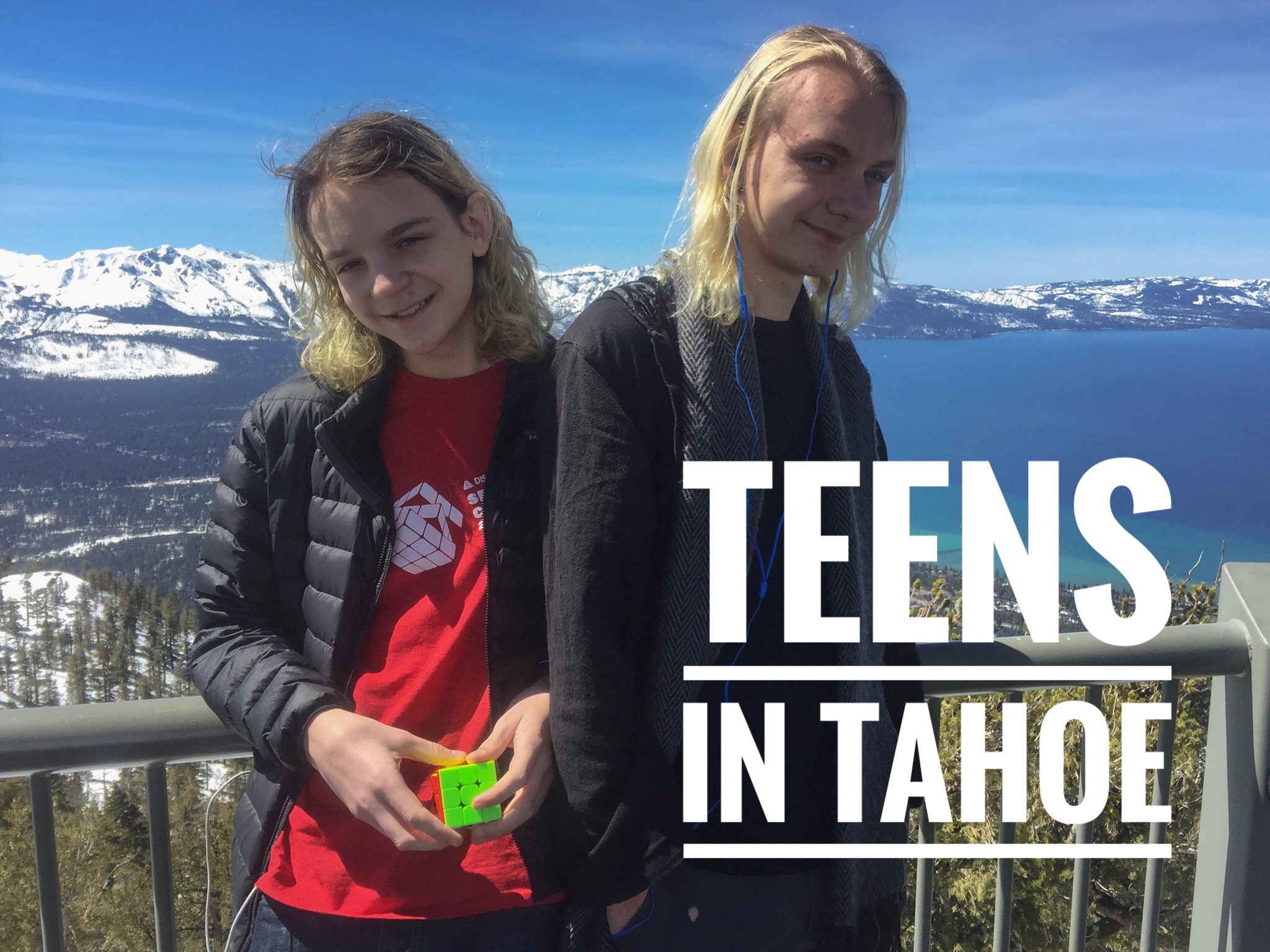
Another spring break season is rapidly approaching. Last year Fred and George joined me in Nevada for their break and they are heading back here again this year. They once traveled with me everywhere but now we have punctuated adventures like break weeks. As they approach adulthood, they have their own developing ideas of what is fun so as I explore my new-ish stomping grounds in Nevada, I’m always on the hunt for things that will appeal to them when they’re here.
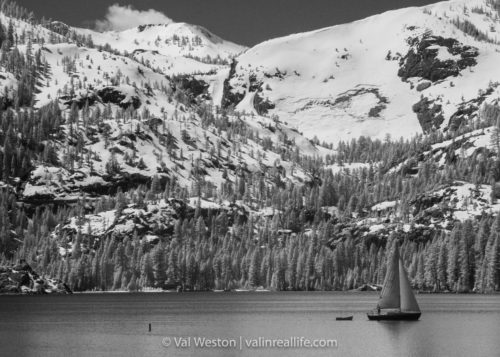
For their trip last year, my goal was to wow them with the wonders of Lake Tahoe. So after a couple of days at home to recover from the three-hour time change, we set off to a rental condo in Zephyr Cove. I knew they didn’t want their days completely filled. That’s not their style and it’s not mine either. With only a few days at the lake and plenty of downtime built in to play games, explore the beach, and hang out, we had to pick outings that had a lot of value for the time invested. But what to do with kids who aren’t interested in snow sports during the ski season at Tahoe?
Heavenly Gondola
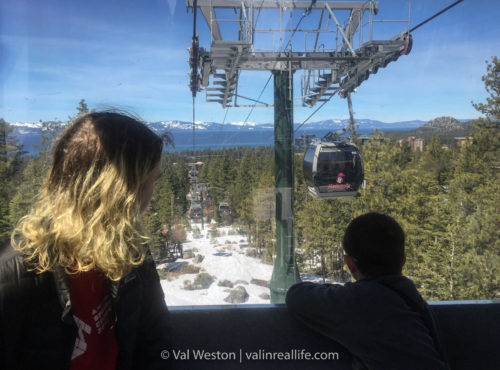
To get the full effect of Lake Tahoe’s grandeur, we picked a ride on the Heavenly Gondola. While most popular with skiers headed up the slopes, the view is spectacular for any visitor. It is a bit pricey if you’re not going to ski or enjoy a hiking trail. If you go, plan to make the most of your ticket price by exploring a bit, preferably at a leisurely pace. Be sure to stop at the mid-station observation deck where you can get shore-to-shore views of Lake Tahoe as well as the surrounding areas. If you’re not planning to invest any more vacation funds in other activities at the top—like skiing or zip-lining—the view from observation deck is the biggest draw for the gondola ride aside from the lovely ride itself.
The Heavenly gondola ride can impress even the most aloof of teens.
The M.S. Dixie II
The M.S. Dixie II is a paddle-wheel boat that runs out of Zephyr Cove and cruises across the lake to Emerald Bay in California. We opted for the daytime cruise which is a stunning 2-1/2 hour ride with a well-crafted narrative about the lake and its history. The recording is broken up into consumable chunks which are best heard on the deck in the brisk spring air. The confined chatter of other passengers made it difficult to hear when inside having lunch.
As for lunch, food and beverages are available on the boat. The food was passable but pricey. It was a necessity under the circumstances and the timing of our trip, though. Food options aside, the ride is very worthwhile. Think of it as the opposite of the gondola—instead of viewing the lake from above, on the boat ride you are traveling on the surface of Lake Tahoe, getting to know it on a more intimate level.
We made a casual visit to Sand Harbor State Park with no big agenda other than to show Fred and George a different area of Lake Tahoe than we’d seen up to that point. Being there in spring, it was still quite chilly and we encountered only a handful of other visitors. That allowed us to enjoy the interpretive trail, geocaches, and Pokémon Go offerings without struggling through crowds that are unavoidable during the summer months.
We didn’t want to be run ragged in the course of exploring activities at the lake so we built in down time to enjoy the property of the condo we stayed in. The attractions are fun but in the end, free-form exploring will always be my favorite.
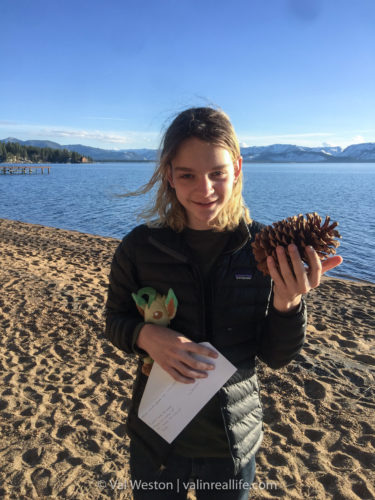
George was amazed by the size of the pine cones. They grow quite a bit bigger here than in his Georgia stomping grounds.
So with that, here’s a short video slideshow of our 2017 spring break at Lake Tahoe, complete with teenage silliness and time lapses.
In recent years, I’ve had the good fortune to explore Death Valley National Park in a variety of ways: by camping and hiking, motorcycle travel, family travel, a photography workshop, and 4×4 excursions. Through those adventures, I’ve become a huge fan of the park. That means I often get quite enthusiastic about extolling the virtues of what it has to offer visitors.
So today I’m bringing you a beginner’s guide to Death Valley. Hopefully this basic introduction will give you the important details you need to make the most of your first trip to the park. Be sure to check out the full photo galleries at the end of the post for more images.
Background
Death Valley is the largest national park in the lower 48 states. At over 3.3 million acres, it’s almost as big as the state of Connecticut. Even at its narrowest width, it can take two hours to drive across it.
It was designated a national monument in 1933. In 1984, the boundaries were expanded and it became a national park.
In spite of its foreboding name, it is rich with history and natural diversity.
The park hosts about 1.3 million visitors a year.
Activities for visitors in the park include hiking, camping, sight-seeing, bicycling, birding, and backcountry driving.
Come see why so many visitors are captivated by Death Valley.
Before you go
Visit the park website. It is the ultimate clearinghouse of introductory information as well as the constantly changing details about road conditions, campgrounds, and points of interest.
Understand that there is very little cell service in the park so you can’t rely on your phone for emergencies or even basic communication in the vast majority of the park.
There are wide seasonal variations in temperatures and weather. The time of year you visit will dictate how you need to prepare for outdoor activities.
The wildflower bloom season in February is very popular. A trip at that time of year often requires lodging reservations months in advance.
If you’re coming for dark skies, pay attention to the moon. It may seem obvious, but rangers often encounter visitors who come for the park’s dark sky status but haven’t figured on a full moon. While any nighttime experience in Death Valley is spectacular, pay attention to your timing if your focus is dark skies.
Follow the park’s Facebook page. It is active and extremely informative.
Wildflower season (typically in late February) is a popular time to visit the park.
When you get there
The visitor center is always the best place to start your adventure in any national park but particularly in Death Valley. The park rangers can help you decide the best way to spend your time at the park, what programs will be offered while you’re there, and give you the latest information on road and trail conditions.
Pick up the park’s Visitor Guide newspaper. It is chock full of the most important information all visitors need to know about the park. You can pick one up at the park entrances, hotels, restaurants, or the visitor center. It’s even available online if you want a head start.
Once you decide on some activities, pick up a tip sheet for your selections. The park offers individual one-page guides for almost every trail and site. You can find them at the ranger desk in the visitor center.
Materials at the visitor center will help you make the most of your Death Valley experience.
Rules
Pay the fee. There are kiosks that accept credit cards at the major entrances or you can pay at the visitor center. Many visitors don’t realize there is an entrance fee to visit the park.
Dogs must be on leash at all times. They are permitted along roads, in campgrounds and picnic areas, as well as select developed locations. But there are vast limitations on where you can go with your pet. They’re not permitted on trails, in the open desert, or inside most buildings and they cannot be left unattended in a vehicle. Please choose wisely when considering bringing your pet to Death Valley.
You must stay on roads when traveling in a vehicle. But you can hike anywhere; trails are not the limiting factor in Death Valley.
Collecting anything in the park is prohibited—rocks, plants, animals, and artifacts are all protected. If you’d like a memento of your visit buy a souvenir from the visitor center. That helps support the park and preserves the landscape for future visitors.
Vandalism is a growing problem in all parks and Death Valley has had some high-profile, extremely damaging events in recent years. I know you aren’t planning to drive your car onto the Racetrack Playa like a recent visitor did, but please keep in mind that even building cairns—though it may seem harmless—is considered vandalism. Simply leave the landscape as you found it and future visitors will get to have the rich experience you’ve had.
Dogs are welcome along roadways and must be on a leash at all times.
Safety
Water! Dehydration is one of the most serious considerations in Death Valley. Most visitors need more water than they realize. The park experiences more rescue incidents when temperatures are over 100 degrees (F) because it doesn’t feel that hot due to the low humidity. In extreme heat, it’s also crucial to manage your electrolyte levels since your body is losing these, too. Without adequate electrolyte balance, you can still have a critical situation even if you have enough water.
In Death Valley a GPS receiver can be misleading at best. Satellite navigation devices often lead visitors to roads their vehicles can’t handle or that don’t exist at all. Pick up a physical, printed park map and orient yourself to the major roads and facilities. Your life could depend on it. The map from the park service is helpful if you’re sticking to the main, paved roads but I highly recommend the National Geographic Death Valley map from Trails Illustrated (Amazon affiliate link).
Road conditions change constantly in Death Valley, especially on the vast network of dirt roads. Many of the roads that are usually accessible to an average sedan can sometimes be treacherous depending on recent weather conditions. That’s why it’s important to learn about conditions while you’re there. There are also roads in Death Valley that are only accessible by high-clearance or 4×4 vehicles even at the best of times. It’s important to know which roads are appropriate for your vehicle.
Check with park rangers to make sure your vehicle is up to the task on Death Valley’s dirt roads.
Food, Lodging, and Supplies
The three lodging and supply centers within the park are The Oasis at Death Valley (formerly called Furnace Creek), Stovepipe Wells, and Panamint Springs. These privately operated facilities offer hotel rooms, cabins, tent cabins, and campsites for RVs and tents.
There are many camping options within the park, both developed and in the backcountry. Some require reservations but many are first come, first served.
Given the location and size of the park things like fuel, food, and supply choices are limited. That also means the prices are higher than many visitors anticipate and it catches them off guard. Visitors simply need to understand it takes more effort to get supplies to the park. It’s extremely isolated. That raises prices.
Stovepipe Wells is one of three lodging and supply locations inside the park.
My recommendations for activities
For a park the size of Death Valley, the seasonal variations, and the variety of activities you can choose from, it’s nearly impossible to give a definitive recommendation on what to do. Your timing, inclination for adventure, and current park conditions will determine your best choices while you’re there.
However, for a first-timer, you can’t go wrong with some of these tried and true favorites to initiate yourself to the wonders of Death Valley.
Get the whole family involved by participating in the Junior Ranger program.
Spend the night in the park. It may be tempting to come in for just a day. But Death Valley is just as spectacular at night as it is in daylight. And in a very different way. Take the opportunity to soak it in and know that one day barely scratches the surface here.
Artist’s Drive: It’s like a roller coaster for vehicles, with glorious geologic scenery.
Zabriskie Point: Accessible to even the most casual of visitors but a stark and extraordinary landscape.
Badwater Basin: At 282 feet below sea level, the salt formations are entrancing.
The salt flats of Badwater Basin occasionally flood but you’ll typically find it dry.
Dante’s View: Remarkable vista over Badwater Basin. The view is incomparable.
Mesquite Sand Dunes: Sunrise and sunset here are captivating. The way the light plays on the sand, ripples, and dunes is magical.
Rhyolite Ghost Town: Just outside Death Valley, this ghost town is home to a historic train depot and quirky art. Take your camera and have fun! The sights are truly bizarre and fabulous.
Mosaic Canyon is an easy, accessible hike near Stovepipe Wells that gives you an up-close look at the intricacies of the geology of Death Valley.
Titus Canyon: If you have a high-clearance vehicle or decide to rent one at the park, this drive is extraordinary and well worth the few hours it will take you. The geology, history, and vistas are amazing.
The Racetrack: The famous Racetrack Playa is a huge draw for visitors to Death Valley. Walking amongst the mysterious “floating” rocks is a delight but is only appropriate in dry conditions. Don’t walk on the playa if it is wet or muddy. Getting to the playa involves rugged driving, therefore a high-clearance vehicle is recommended. Check with rangers at the visitor center for advice on whether or not your vehicle is suitable for the current road conditions when you visit.
The “floating” rocks of the Racetrack Playa
Enjoy your visit!
Of course, this is just enough to get you started at Death Valley National Park. There’s so much more you can dive into if you have the time to go deeper. But that’s a post for another time.
And like any outdoor adventure, visitors need to approach the park with curiosity as well as caution. For all of its extraordinary beauty and the accessibility provided by the National Park Service, Death Valley is still a wilderness. Armed with the information here and on the park’s website, you’re on your way to having a fantastic experience.
I have to send out extreme appreciation and thanks to the the fabulous Ms. Abby Wines, National Park Service Management Assistant for Death Valley, for sharing her knowledge about the park with me to help make this guide as comprehensive as possible. Thank you, Abby!
Today Nevada turns 153. On October 31, 1864, the constitution of the new state was telegraphed to President Lincoln from Fort Churchill, not far from where I now call home. I’m very much smitten with my new home state. This year, for the first time, I got to celebrate Nevada Day in Carson City with my fellow Nevadans.
Nevada Day is the largest statehood celebration in the country. A state holiday gets that ball rolling on the last Friday in October. That’s just a beginning, though—festivities continue through the weekend. Nowhere is Nevadan pride more apparent than at the parade and rock drilling contest. The collection of entries in the parade likely belies most people’s image of the state and its people. In a few hours of watching the parade of over 200 entries you’ll see a lot of what you’d expect at any parade such as marching bands, dance and cheerleading troupes, ROTC and veterans groups, rodeo queens, law enforcement and fire departments, local businesses and clubs, and politicians. On Nevada Day though, you’ll also get brothel “bunnies”, wild horse advocates, a breadth of native tribes, Pony Express preservationists, low-rider enthusiasts, sikhs, gunfighters, vaqueros, Clampers, and even the president and first lady of Molossia.
Stomping grounds—the areas where you spend most of your time, the accessible places from your home base, your most familiar territory. For most of my life, my stomping grounds consisted of the humid southeastern temperate forests, the wet earth. It’s lush, ethereal, and enveloping. The air is dense, the landscape is verdant, and the scent of humus permeates every cell along the length of your nasal passages. In this setting you are part of the landscape, immersed in it.
Now my stomping grounds are northern Nevada deserts, a stark contrast to my experience in the southeast. The places I now get to explore on a daily basis are arid, expansive, and rugged. It’s a land of rapidly changing weather and landscape. Here the view extends for countless miles—mostly dusky tones dotted by green. It’s weathered, older mountains flanked by younger, rougher Sierra Nevadas off in the distance. Sunsets explode the evenings here on a regular basis. The land soaks in the glow and reciprocates the sky’s effort.
And the smell that dominates my senses now is sagebrush. After a rain, the fragrance seeps into every molecule of air around you. It drops deep into my lungs. Even during the drier months, when I return to civilization after exploring the backcountry, that smell is embedded in my clothes and boots.
There is peace in that smell. The smell of home.
My new stomping grounds, the territory I get to explore practically in my backyard.
I admit it—I never gave Nevada more than a passing thought before George requested a birthday geocaching adventure back in 2012. With that trip, limited to the southern part of the Silver State, I had no idea the breadth of what Nevada has to offer. At least until beginning to explore it in earnest a couple of years later. Since then, I’ve criss-crossed the state exploring via car and motorcycle.
And now I’m a resident of the 36th state. As a new Nevadan, and having discovered the virtues of the landscape here, hearing Nevada referred to as “flyover country” is my cue to explain what you’re missing. As much as I love my former home state of Georgia, the vastness to explore here is entirely different. I’m still just scratching the surface here but what I have discovered so far leaves me wanting more.
Great Basin National Park is like the Great Smoky Mountains of the west with unparalleled ecological diversity.
The Nature of Nevada
Most of the state falls within the basin and range province which is characterized by narrow north-south trending mountain ranges with flat valleys in between. This is a result of tectonic extension, pulling the earth’s crust apart. Pretty cool, huh? Even if you’re not a former geologist.
What that geologic activity does for the landscape is create dramatic contrasts in what is the most mountainous state in the lower 48. The elevation in Nevada ranges from 481 feet above sea level to over 13,000. Most of the state falls within the “Great Basin,” the largest desert in North America. In addition to the Great Basin, a small southern portion of Nevada falls within the Mojave desert and the western portion of the state is bounded by the Sierra Nevada mountains, including Lake Tahoe. That means you have everything from alpine ecosystems to pinion-juniper and sagebrush steppe within its massive 110,000 square miles, making it the 7th largest state in the U.S.
In spite of being the driest state in the U.S., Nevada has a multitude of lakes, rivers, and reservoirs. Those, combined with the variety of ecosystems means Nevada is filled with wildlife, from antelope to mountain lions, desert tortoise to western diamondbacks, red-tail hawks to sage grouse, as well as wild horses. The list goes on. Of course, much of Nevada is desert and to the casual observer, it might seem a barren wasteland. Hardly! Much of our wildlife lives in the “sagebrush sea,” which is amazingly green in the spring.
Doesn’t sound like a land of desolation, does it?
The iconic wild horses of northern Nevada.
The sagebrush sea meets the Sierra Nevada mountains.
History
Nevada has an eclectic history. The Nevada Territory was carved from the Utah Territory, its statehood coming a few years later as a result of the building tensions over slavery. Nevada’s slogan, “Battle Born,” reflects its birth during the Civil War.
Mining is what put Nevada on the map in modern times, though. And along with that boom came the characters who became legendsof the wild west, including the likes of Mark Twain and the Pony Express. Not long after that sudden influx followed the railroads needed to serve the demands of mining. That connection cemented Nevada’s place in U.S. history. Sadly, the inevitable busts that accompany mining booms left once-vibrant hubs to fade into the lore of our many ghost towns.
In recent decades, Nevada has become more known for its entertainment and casinos. Yet most of the state is still largely viewed as a wasteland. That perception led others to deem it an ideal location to test powerful weapons. In my mind, that aspect of Nevada’s history was the turning point into the modern wild west. One in which atomic bomb testing, casinos, and brothels co-exist alongside cattle ranching, wild horses, and vast wilderness.
Nevada was nearly uninhabited before the discovery of the Comstock Lode.
Adventure
Over 80 percent of Nevada is public land, largely under the care of the Bureau of Land Management (BLM). It’s an outdoor adventurer’s paradise. The landscape is highly variable, more so than most people realize. Which is why Nevada gets so overlooked as an adventure destination. For those who embrace Nevada, there are lots of different ways to get your adventure on.
The wide range of elevation, landscapes, and ecosystems provide the framework for every type of outdoor pursuit. You name it, you can likely do it in Nevada. Hiking, climbing, camping, snow sports, water sports, cycling, wildlife viewing, hunting, fishing, off-roading, and motorcycling, of course. All of that with spectacular views.
While we have our portion of Lake Tahoe and the adventures that can be had in an alpine setting, adventuring in Nevada does mean embracing the desert. Keep in mind this is high desert or “cold” desert which means nights are surprisingly chilly. Not to worry, we’ve got a multitude of hot springs for you to warm up in, thanks to the geology here.
We do have one national park to claim as our own, Great Basin. The ecosystem and landscape diversity in the park is nothing short of astonishing. And yet it’s the least-visited park in the U.S. in spite of having peaks reaching over 13,000 feet, caves, and a surprising variety of wildlife. The advantage of its remoteness is that we have a breathtaking park without the crowds.
Add in Nevada’s growing state parks system and the opportunity for outdoor adventure of all kinds awaits. Personally, as I’ve gotten to know Nevada, I’ve found the weather to be more volatile than any place I’ve experienced to date. That makes for challenging adventures that make you think ahead.
Nevada hot springs soothe the weary traveler.
Soul-stirring motorcycling will leave you wanting to explore more of Nevada’s expanses.
People and Places
The people of Nevada are fiercely independent. But in a measured way; not with the bluster like Texans proclaiming their superiority. It’s a quiet confidence and friendliness with no need to posture. Maybe it’s the wide open spaces and ruggedness of the state that breeds independence in Nevadans. Living here requires self reliance.
With only a couple of large urban areas and the vastness of the landscape, towns can be pretty sparse in Nevada. That creates a unique and quirky mix of places to embrace history and culture. Explorers, adventurers, and sight-seers have access to an array of experiences: rural ghost towns to top-notch museums, spectacular shows to hole-in-the-wall restaurants, and events spanning the range of the Cowboy Poetry Festival to motorcop competitions and Burning Man to camel races. It’s that kind of breadth that makes Nevada difficult to define. Throw in oddities like the E.T. Highway and Rhyolite and you’ll realize that a sense of humor is alive and well in Nevada.
Racing camels in Virginia City
The town of Belmont is an “almost” ghost town.
Find out more
If you didn’t already notice, I’m quite smitten with Nevada and what it has to offer. I’ve learned the Nevada is a land of extremes and is truly no place for wimps when it comes to the outdoors. When you embrace the ruggedness of this state, you are rewarded with amazing adventures. I hope I’ve convinced you this is no fly-over country.
Having only discovered the wonders of Nevada in recent years, I’m hardly the go-to expert, though. To find out more, head over to the Travel Nevada website. Lots of info from the folks who know where the good stuff is.
Nevada will make you feel small, especially at places like Diana’s Punch Bowl, a vertical-walled hot spring so fierce, it’s not suitable for soaking.
It’s the second weekend in September and I’m in the center of the arena at the Virginia City Camel and Ostrich Races once again. After our brief interviews for the spectators, Joe Hedrick, the man in charge of the show, has just given us the command to head to our respective chutes. As we work our way through the soft sand, the butterflies in my stomach amplify their gentle fluttering to a full-fledged rave. At the last moment I decide to ditch my over-shirt and media badge as potential distractions. I fling them carelessly to the side of the arena and approach the back gate of the chute. Chute number one opens and I get the first look at my mount.
All smiles before the action starts.
Back in the chute
My camel rocks back and forth vigorously. I lie to myself that this isn’t a problem and feign confidence as I climb up the flimsy wall of the starting gate. Once on top of the narrow, one-inch-thick wall, I see that my beast is still rocking and crammed as far away from me in the chute as he can possibly be. I reach for the handler’s firm, stabilizing grasp while attempting to let go of the back wall. It takes a couple of false starts to release my grip on the only solid thing around. I squat, hoping to slide onto the camel. I struggle to gauge the distance with his movement. I make the mistake of looking down. I freeze for a moment. And now I’m hyper-aware that I’m taking too long to mount. These camel races are fast-paced and the organizers like to keep things moving.
Joe Hedrick giving the pre-races death-and-destruction speech.
After a couple more attempts to mount gracefully, I accept that grace will not be part of the equation here. I take a deep breath and lunge for it. It’s the only thing to do at this point. I don’t have my timing quite right with the swaying beast so I overshoot a little and end up almost in the next chute. My foot making contact with another camel’s back in lane number two is the only thing that keeps me from going over. I quickly wrestle myself into position, trying to regain focus after my inelegant mounting attempt.
The acrobatics involved in mounting the camel.
I confirm with the handlers that I’m ready to ride. My camel is swaying even more vigorously now. Holding on fiercely with my legs and arms, I wait for the trumpet call and the gates to burst open. Just before the big moment, something sprays me and my two fellow camel riders from behind. The startling splash makes me turn back to see what was happening. Of course, at that very moment I was turned backwards, the gates opened.
My camel bursts out to the left as much as forward with the first big push of his strong legs. The force sends my disoriented body to the right, clenching the front ring for dear life. I’m all-too-aware that pressure on the side rail of the saddle is ill-advised. The sudden forward motion, along with that jolt to the side, also sends my torso upwards. Fortunately my noggin does not hit the rigid header to the starting gate. It does hit the wooden chute number sign, though. Thankfully, it swings.
Charging out of the chute, thankful the sign overhead didn’t knock me silly.
I have milliseconds to regain my composure as my mount races headlong down the first stretch of the u-shaped arena. He pulls out strong and in the lead. As he approaches the turn, he slows. I watch as the other racers’ camels run wide around the arena. To save distance, I pull my camel to the left, close into the turn to make up some time. It doesn’t work. He has other ideas. As in, “Nah, I’m going to just jog this one in.”
I watch as the other racers approach the finish line and I begin to laugh. I can hear Monty, one of the camel handlers, behind me trying to get him to run. I’m urging my camel forward with my right heel hard but fruitlessly. My many years of horseback riding clearly do not impress this animal.
Monty hard at work trying to motivate my ride.
I laugh my way across the finish line thinking what a marvelously bizarre day it has been. I hand the lead rope to the handler and prepare to perform a one-legged dismount from my unmotivated camel. I learned how to do this last year so at least that isn’t a surprise. Once again I plummet six feet to the arena floor from the back of this beast. With more skill this time, although not gracefully by any stretch of the imagination.
As for the unexpected splash at the start, it turns out that a wind gust blew a puddle of rain water off of the canopy overhead. My competitor in chute number two took the brunt of it and was completely soaked. And she thought her camel had peed on her. No two camel races are the same.
Nope. Nothing doing. This camel ain’t playing today.
prove more challenging. Just to be clear, I would rather attempt six-foot leaps off of a camel’s back all day than try to run.
For the love of camel racing
Back in the center of the arena for the post-ride interviews, now being 1-1 in my camel racing career, I lamented my loss to the crowd. And to the question if I’d ever do it again? Oh, yes. You bet your sweet camel I’ll do it again.
The fun doesn’t end in the arena. Whether you’ve won or lost, there’s always the Camel Hump Ball to enjoy and cut loose with the camel handlers like Monty.
When I lived in the southeast, I spent a good bit of time immersing myself in the nature of the Great Smoky Mountains. That included becoming a Certified Southern Appalachian Naturalist (SANCP), through a program that gave me the opportunity to understand the intricacies of the natural environment there.
Then I moved to Nevada. Other than the basic concepts of plant and animal identification and behavior, there’s very little that translates between the lush forests of the southeast and the high desert where I now live. That means I’m now starting from scratch to keep my inner naturalist satisfied.
Unlike he SANCP program I completed in Tennessee, there really isn’t a Nevada naturalist program that serves my purposes in the northern part of the state. That leaves me piecing together my understanding of the environment here on my own. As you can imagine, that takes some effort which means I was delighted when I discovered the Nevada Native Plant Society. It’s an active, engaged group that offers a lot of field trip opportunities around the state.
My first foray with them was to visit the area that will become the Walker River State Recreation Area. The park will be a phenomenal 12,000 acres, but most importantly, that includes 28 miles of riparian habitat. In a desert state, protecting the waterways that are our lifeline is crucial so this acquisition into the Nevada State Parks system has many implications beyond recreation for you and me.
In the field
I couldn’t pass up the chance to join knowledgeable naturalists on a visit to the area while it is still in its infancy as a budding park. These folks really know their plants and I love soaking up their naturalist mojo. For a newbie, the word jumble of unfamiliar plant names gave way to trying to grasp the broader picture of the types of plants making their way in the high desert.
The biggest take-away for me was understanding how to see the hidden treasures of the desert. This is a completely different world. I’ve spent a good bit of time in the desert but not in this context, in which I’m trying to understand it at the same level I got to know the Smokies. It requires recalibrating from the frequently obvious blooms and features in lush forests to learning how to spot little beauties smaller than a pinky nail in a vast open landscape.
Searching for desert gems. Believe it or not, they were everywhere. You have to know how to look for them though.
This seemingly dainty flower somehow manages to survive in the harsh Nevada landscape.
Looking out across the high desert, you wouldn’t think so much would be hiding.
Thick leaves and luscious color, but small! I’m completely smitten with the tough little survivors of the Nevada desert.
The rugged Nevada landscape seems no place for delicate beauty, yet what you can find here is astonishing. This exclosure was built to study the impact of grazing on the plant life.
One of the larger flowers, the lupine.
Lunch break in the Nevada version of an oasis, a cottonwood-lined stream.
I loved discovering how alive with color the desert is.
Mad love
I was thoroughly blown away by the collective knowledge of the people in the group. They are dedicated to their craft. The folks from the Walker Basin Conservancy have been working relentlessly to protect this area. For those of us on the outside of this process, we often take for granted our existing parks. Hanging out with these inspiring people reminded me how much energy and dedication goes into making a new park. I’m very grateful for their efforts. I’m looking forward to enjoying the fruits of their labors.
In the meantime, I’ve got a LOT to learn about Nevada’s ecosystems! See you in the field.
It’s heartening to know there are dedicated people working to protect our lands and provide a way for us to enjoy it in the form of a park.